
Reviewed · MUSEUMS
Naples: National Gallery of Capodimonte Tour
The best reason to visit Capodimonte is its range. In one former royal palace, you move from Farnese Renaissance masterpieces to Caravaggio’s stark Flagellation, then on to Andy Warhol’s Vesuvius. It is a serious art stop, but the two-hour format keeps it from becoming an all-day march through galleries.
I like the private format, since your guide can focus on the works that interest you instead of delivering a fixed speech to a large group. I also like that the tour includes the entrance ticket and skip-the-line access, which saves time at a museum spread across several floors.
The main drawback is the price: $249.23 for a private group of up to one person is a large outlay for two hours. Transportation is not included, so you must make your own way to Capodimonte and arrive 10 minutes early.
Key points to know before booking
- Farnese treasures open the tour: See works linked to Titian, Masolino, Masaccio, Raphael, and Michelangelo.
- Caravaggio is the emotional high point: The Flagellation appears at the end of the second-floor route.
- The building matters: Capodimonte began as a royal palace designed to house the collections of Naples’ rulers.
- The collection reaches into modern art: Andy Warhol’s Vesuvius gives the final floor a sharp change of mood.
- Private guiding keeps the visit focused: The live tour is offered in English or Italian for a private group.
- Plan your arrival carefully: The tour begins and ends at Museo e Real Bosco di Capodimonte, with no transport provided.
Why Capodimonte deserves a place in your Naples plans
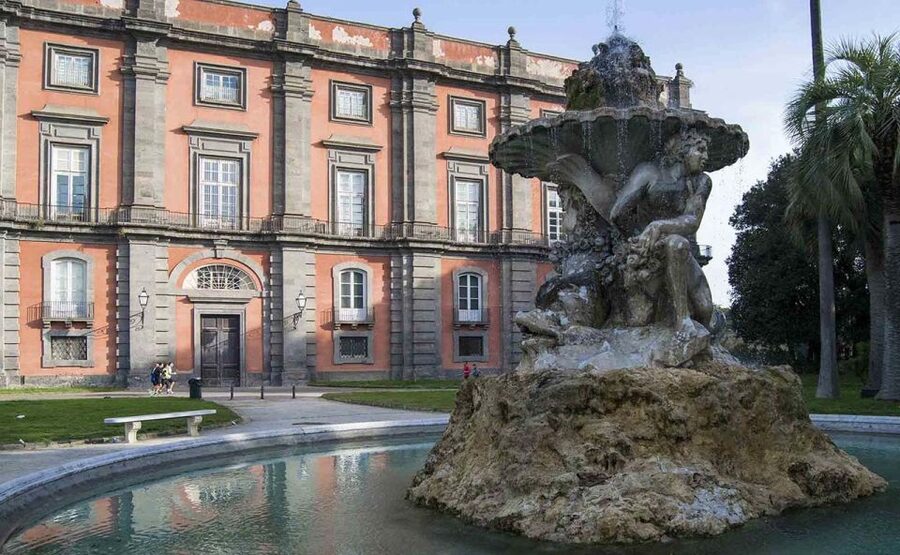
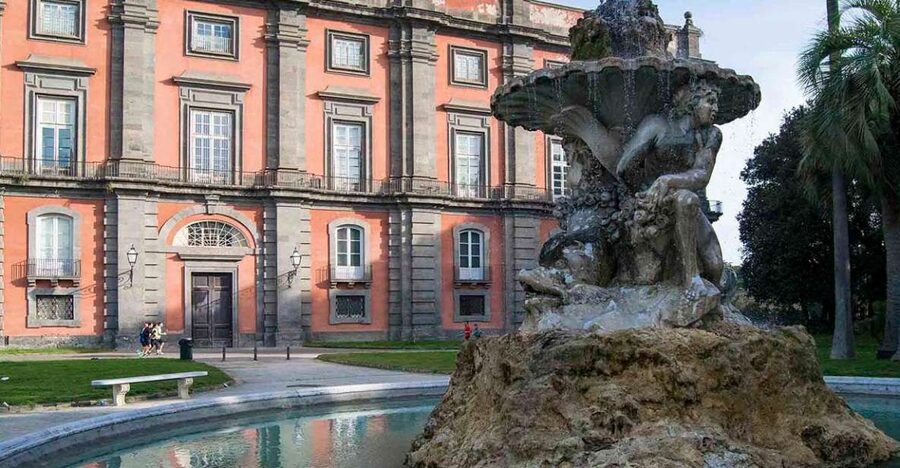
Naples is often associated with street life, pizza, churches, and archaeological sites. Capodimonte gives you a different view of the city. Here, the setting is a former royal residence surrounded by the Royal Wood of Capodimonte, and the art collection covers centuries of Italian painting.
The museum was inaugurated in 1957, but its story reaches much further back. The palace was built to receive the art holdings of the Kings of Naples. That explains the unusual scale of the collection. You are not entering a small gallery built around one famous painting. You are walking through rooms intended to hold royal collections over generations.
I find this background useful because it changes how you read the building. The architecture is not just a shell around the paintings. The grand stairs, royal rooms, and formal layout help explain the power and ambition behind the collection.
The tour lasts two hours. That is enough time for a strong introduction to the museum and its major works, but not enough to examine every room at a slow pace. You should think of this as a guided highlights visit, not a complete study of Capodimonte.
More museums and sites in Naples:
- Naples: National Archaeological Museum Ticket & Audio App
★ 4.4 · 617 reviews - Naples: National Archaeological Museum of Naples Guided Tour
★ 4.8 · 498 reviews - Naples: National Archaeological Museum Tour & Digital Guide
★ 4.2 · 177 reviews
Meeting at the Royal Wood and museum entrance
Your meeting point is Museo e Real Bosco di Capodimonte. The tour begins and ends there, so you do not need to arrange a separate pickup or wonder where the guide will leave you. Transportation is not part of the experience, though, so allow time to reach the museum on your own.
Arrive 10 minutes before the scheduled start. That small cushion matters in Naples, where traffic and city connections can take longer than expected. It also gives you time to find the meeting point without turning the first minutes of the tour into a scramble.
The museum sits within the Royal Wood of Capodimonte. You get a photo stop and a short break during the visit, but the main focus remains the museum. If you want a longer walk through the grounds, plan that separately and do not count on the two-hour tour covering the park in depth.
The private format is especially useful here. Capodimonte contains a lot of art, and a live guide can help you understand why a work matters before you move on. The guide’s role is not simply to point at famous names. A good visit connects the royal setting, the artists, and the changes in Neapolitan painting.
The monumental stairs and the Farnese Collection
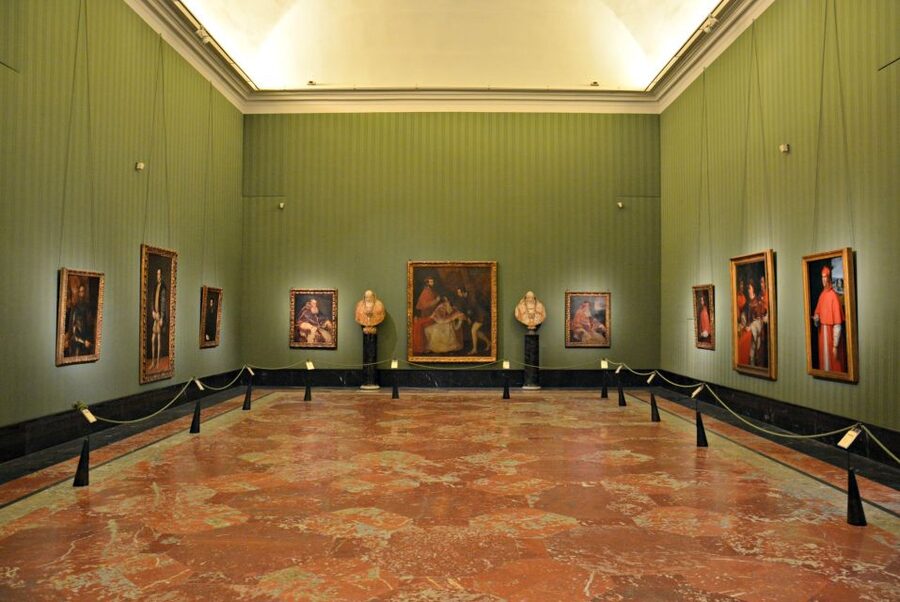
The tour begins with the monumental stairs and the Farnese Collection. This is a strong opening because the first rooms place you among major names from the Italian Renaissance and earlier painting traditions.
You can expect to see works associated with Titian, Masolino, and Masaccio, along with drawings by Raphael and Michelangelo. The mix is important. You are not seeing only finished paintings. Drawings let you consider how artists planned figures, movement, and composition before a final work took shape.
Titian brings the color and authority of Venetian painting. Masolino and Masaccio point to an earlier stage of Renaissance art, when artists were working through new approaches to space, human form, and believable scenes. The Raphael and Michelangelo drawings offer a more direct look at artistic design and handwork.
This section rewards attention, but it can also feel dense if you do not know the names. That is one of the clearest reasons to book a guide. You can ask for a simple explanation of what separates one period from another, rather than trying to sort out Renaissance developments from wall labels alone.
The palace setting adds weight to the experience. The royal rooms were designed to accommodate important collections, so the transition from grand staircase to major art feels deliberate. You are not simply checking off famous artists. You are seeing how a royal residence presented cultural power.
The first floor and the Royal Apartments

The first floor carries you through a large portion of the museum’s art history before ending with the Royal Apartments. The route gives you a sense of how broad the collection is, but two hours means your guide must choose the main stops carefully.
The Royal Apartments are worth noting even if your main goal is painting. They connect the museum to the people who lived with these objects and collected them. The palace was always intended to house the legacies of Naples’ kings, and the apartments help make that idea concrete.
I would pay attention to the change in mood here. The paintings may ask you to study technique and subject matter, while the apartments show court life and presentation. The building itself becomes part of the tour’s subject.
Since the museum is large, you should not expect uninterrupted time at every work. If you have a particular artist at the top of your list, tell the guide at the start. The private format gives you a better chance of shaping the visit around your priorities, although the available details do not promise a fully customized route.
A few more Naples outings worth a look
- From Naples: Pompeii Ruins & Mount Vesuvius Day Tour
★ 4.3 · 11,459 reviews - From Naples: Sorrento, Positano and Amalfi Full-Day Tour
★ 4.6 · 10,988 reviews - From Naples: Sorrento, Positano & Amalfi Coast – Small Group Tour
★ 5.0 · 8,643 reviews - Naples: Catacombs of San Gennaro Entry Ticket & Guided Tour
★ 4.6 · 7,941 reviews
Neapolitan art from the Middle Ages to Mannerism
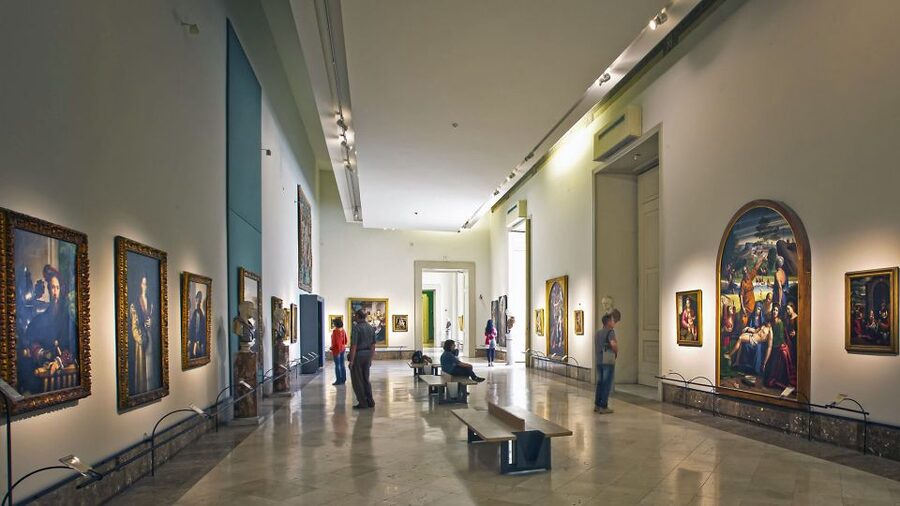
The second floor turns toward Neapolitan art. The route covers the Medieval period, the Renaissance, and Mannerism, giving you a more local focus after the broader Farnese collection.
This change is one of the tour’s most valuable features. You are not only looking at famous artists brought into Naples from elsewhere. You are also seeing how painting developed in Naples and how local artists fit into wider Italian movements.
The period range is broad. Medieval art can feel formal and symbolic, while Renaissance painting brings greater attention to space and human presence. Mannerism often pushes figures and compositions into more unusual shapes and poses. A guide can make those shifts easier to see without turning the tour into a lecture.
The second floor also builds toward Caravaggio. The route ends with his Flagellation, a work that gives the visit a powerful focal point. Its placement at the end of the corridor creates a natural sense of arrival, especially after you have moved through several periods of Neapolitan painting.
You should not rush this part. The museum’s size can tempt you to treat each room as a passage to the next famous name. Instead, use the guide’s explanations to understand why local painting matters and why Caravaggio’s work has such force.
Caravaggio’s Flagellation as the central stop
Caravaggio is likely to be the name many people recognize before they arrive. The Flagellation gives you a chance to see his dramatic approach in person rather than through a reproduction.
The painting is presented as the light at the end of the second-floor corridor, a memorable piece of staging within the museum. Caravaggio’s art is known for strong contrasts, direct figures, and emotional tension, and the work provides a sharp contrast with the earlier art along the route.
This is also where a guide can add the most value. A useful explanation should help you look at the arrangement of figures, the treatment of light, and the emotional pressure of the scene. You do not need an art degree to appreciate it, but a few well-timed observations can keep you from simply glancing at the painting and moving on.
Because the tour has a fixed two-hour length, ask your guide for time here if Caravaggio is your main reason for visiting. The available information does not specify how long the group remains at each work, so your own priorities are worth making clear at the start.
The contemporary collection and Warhol’s Vesuvius
The third and final floor changes the pace again with the contemporary collection. The key work mentioned is Andy Warhol’s Vesuvius, a striking modern response to Naples’ famous volcano.
After Renaissance, Baroque, and Neapolitan painting, Warhol’s work can feel unexpected. That is precisely why it works well as a closing stop. You finish by seeing how an artist from the modern era interpreted a symbol tied so closely to Naples.
Vesuvius also links the museum back to the city outside. The work is not an abstract modern footnote disconnected from the rest of the visit. It brings a familiar Neapolitan subject into a different visual language.
The final floor may appeal most to you if you want more than old-master painting. If your main interest is Renaissance or Baroque art, you may prefer to spend more of your limited time on the earlier floors. Again, the private guide can help you keep the balance that suits your interests.
What the private guide changes
A private group can make a major difference in a museum this large. You are not trying to hear an explanation over a crowd, and you can ask a question when a painting catches your eye. The tour is available in English or Italian.
The guide is described as kind and willing to go beyond the basic plan, which matters in a museum visit. You want someone who can explain difficult art in plain language and adjust the pace when a work deserves more attention.
The format does not mean you will see every gallery. Two hours is still two hours. It means the time can be used with more purpose, especially if you arrive with a short list of interests: Caravaggio, the Farnese Collection, the Royal Apartments, or modern art.
The small-group setup also suits first-time visitors who want orientation. Capodimonte can be difficult to absorb without a sense of sequence. The guide provides that sequence, moving from the royal collection to Neapolitan art and then to the contemporary floor.
Price, timing, and practical value
The listed price is $249.23 for a private group of up to one person. That is expensive if you are comparing the tour with a standard museum entry, but the price includes the guided visit, entrance tickets, and skip-the-line access.
The value depends on how much structure you want. If you already know Italian art and prefer to wander alone, the cost may not make sense. If you have limited time in Naples and want a focused explanation of the museum’s major works, the private guide can make the visit more productive.
Two hours is a sensible length for a first visit. It gives you a clear route without demanding half a day indoors. Still, Capodimonte is large, and you may want extra time after the tour if you find a particular room especially appealing. The activity itself ends back at the museum meeting point.
Wheelchair access is available. The tour includes no transportation, so check your route to the museum before booking. Free cancellation is available up to 24 hours in advance, and you can reserve now and pay later, useful if your Naples schedule is still changing.
Who should book this Capodimonte visit
I would recommend this tour to you if you care about art but do not want to spend hours decoding a large museum on your own. It also fits a short Naples stay, since the two-hour route covers the collection’s main eras and ends where it began.
It is a good match for anyone drawn to Titian, Caravaggio, Renaissance art, Baroque art, or Warhol. Families and mixed-interest groups may also appreciate the changing pace, since the route moves from old masters to royal rooms and then to modern art.
You may want to skip it if you strongly prefer independent visits, dislike fixed timing, or are mainly looking for transportation around Naples. The tour does not provide transport, and its high private price is difficult to justify if you only want entry to the museum.
Should you book it?
Book this Capodimonte tour if you want a focused, private introduction to one of Italy’s major art museums, especially if Caravaggio and the Farnese Collection are high on your list. The strongest reasons are the informed live guide, the private format, the skip-the-line entry, and the clear route from Renaissance art to Warhol.
Think twice if $249.23 for up to one person stretches your budget or if you want a slow, all-day look at every gallery. For a short, structured visit that puts the palace, Neapolitan painting, Caravaggio, and contemporary art in one frame, it offers a useful way to spend two hours.
FAQ
Where does the Capodimonte tour start?
It starts at Museo e Real Bosco di Capodimonte.
Where does the tour end?
The activity ends back at Museo e Real Bosco di Capodimonte.
How long does the tour last?
The tour lasts two hours.
What languages is the tour offered in?
The live guide conducts the tour in English or Italian.
Is the tour private?
Yes. It is offered as a private group experience for up to one person.
Are museum entrance tickets included?
Yes. Entrance tickets are included in the tour price.
Does the tour include skip-the-line access?
Yes. Skip-the-ticket-line access is included.
Is transportation included?
No. You must arrange your own transportation to and from the museum.
Is the tour wheelchair accessible?
Yes. The activity is listed as wheelchair accessible.
Can you cancel the tour for a full refund?
Yes. You can cancel up to 24 hours in advance for a full refund.
Just added around Naples
- Naples: Guided Walking Tour★ 4.7 · 63 reviews
- Wine tasting in the Vesuvius National Park★ 3.5 · 4 reviews
- Naples: Pompeii and Vesuvius Skip-the-Line Day Trip★ 3.8 · 32 reviews
- Visit the Museum MANN with a professional guide★ 5.0 · 3 reviews
- Walking-tour of Naples hystorical Centre★ 4.4 · 4 reviews
- Vesuvius – Herculaneum – Pompeii Excavations Tour★ 4.2 · 9 reviews
- Pompeii: Vesuvius at Sunset★ 3.5 · 31 reviews
- Vesuvius and Herculaneum from Naples★ 3.7 · 29 reviews
Museums, compared.
National Archaeological Museum Ticket & Audio App
Read our review →
National Archaeological Museum of Naples Guided Tour
Read our review →
National Archaeological Museum Tour & Digital Guide
Read our review →


Sant’Aspreno ai Crociferi: Church & Jago Museum Guided Tour
Read our review →
Skip the Line: National Archaeological Museum of Naples Entry Ticket
Read our review →
Browse the lists this tour appears in