Reviewed · TICKETS
Naples: San Lorenzo Maggiore and Neapolis Sotterrata Ticket
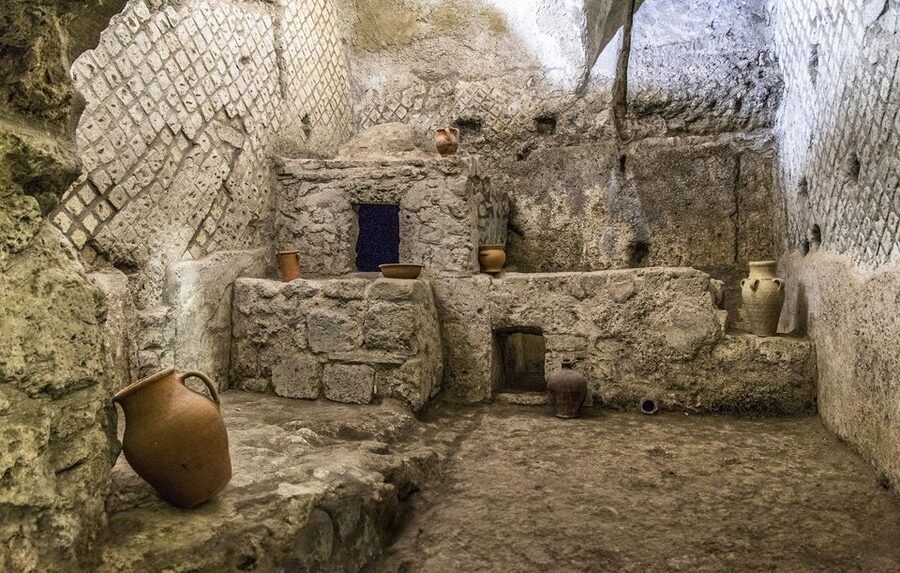
The most striking part of San Lorenzo Maggiore is below street level. Descend 10 meters beneath the church and you reach Neapolis Sotterrata, the buried commercial center of the ancient Greek-Roman city, complete with an old road and market remains.
I like the contrast here: first, you see Franciscan art and Gothic rooms above ground, then ancient stonework below. I also like the small museum, which helps connect the Roman remains with Naples through the nineteenth century. The main caution is scale. This is not the vast, half-flooded Naples Underground experience some visitors expect. The archaeological section is focused and can be seen fairly quickly.
Key points
- A Roman market beneath the church: Walk through the remains of the ancient Macellum, once a commercial heart of Neapolis.
- Four parts of the complex included: Your ticket covers the cloister, Chapter Hall, Sisto V Hall, and museum.
- Fine Franciscan decoration: Look up in Sisto V Hall for its colorful ceiling frescoes.
- A useful rainy-day stop: The indoor rooms, museum, and cool underground section make this a practical break from Naples streets.
- Free audio guide, paid guided option: Download the audio guide onsite, or ask about the €2 guided tour.
- Central but easy to miss: Use Piazza San Gaetano 316 as your target, since GPS may lead you past the entrance.
What you actually visit at San Lorenzo Maggiore
San Lorenzo Maggiore gives you several linked experiences rather than one large monument. You enter at Piazza San Gaetano, 316, in the historic center of Naples, and work through a church complex, medieval rooms, a museum, and the archaeological site below.
The ticket is valid for one day, so you do not have to rush through every room at once. Still, this is best treated as a compact cultural visit rather than a full-day attraction. Plan enough time to look carefully at the details, especially if you want to use the audio guide or add the onsite tour.
I find the arrangement effective because each section answers a different question. The church and Franciscan rooms show the religious life of the complex. The museum supplies objects and context. The underground remains reveal the much older city beneath your feet.
The entrance is in a busy part of central Naples, but it is not always obvious from the surrounding streets. Set your map for the exact Piazza San Gaetano address. One practical warning: GPS can take you past the entrance, so slow down when you reach the square and look for the complex itself.
A few more Naples outings worth a look
- From Naples: Pompeii Ruins & Mount Vesuvius Day Tour
★ 4.3 · 11,459 reviews - From Naples: Sorrento, Positano and Amalfi Full-Day Tour
★ 4.6 · 10,988 reviews - From Naples: Sorrento, Positano & Amalfi Coast – Small Group Tour
★ 5.0 · 8,643 reviews
The cloister and Chapter Hall above ground
The visit includes the cloister, a calmer architectural space within the busy center. This is a good place to pause before moving into the more decorated rooms and the archaeological section.
The Chapter Hall has a Gothic character and a late-fourteenth-century Gothic portal. I would give this room more attention than a quick walk-through allows. Its value is not only visual. It helps you see the complex as a working religious institution shaped over centuries, rather than as a container built only to display old objects.
The hall is one of the better stops for anyone who likes architecture. You can compare its Gothic lines with the later decoration in Sisto V Hall, then see how both periods sit within the same complex.
The rooms are not presented as a long guided route with every minute planned for you. That gives you freedom, but it also means the audio guide matters if you want more than a visual visit. If the download does not work on your phone, you can still walk through the rooms, though some details may be harder to understand without explanation.
Sisto V Hall and the Franciscan decoration
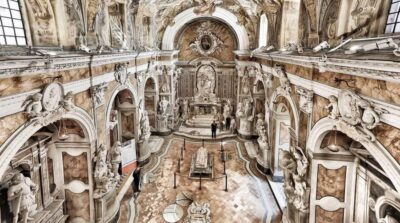
Sisto V Hall is the visual high point above ground. Its ceiling frescoes provide the kind of detail that rewards looking upward, so do not let the room become a quick passage to the underground area.
The Franciscan connection gives the hall a distinct character. You are not simply seeing an archaeological display. You are also seeing how religious art shaped the identity of San Lorenzo Maggiore.
I like this section for the change of mood. The Gothic Chapter Hall feels more restrained, while Sisto V Hall brings color and visual drama. If you have been walking through Naples all morning, this is a welcome indoor pause and a chance to take in art without the scale or crowds of a major museum.
The exact amount of time you spend here depends on your interest. Someone focused mainly on ancient Rome may move quickly. I would stay longer if you enjoy frescoes, ceilings, or church interiors, because the hall is one of the clearest reasons to include the full complex rather than visit only the ruins below.
Descending 10 meters to Neapolis Sotterrata
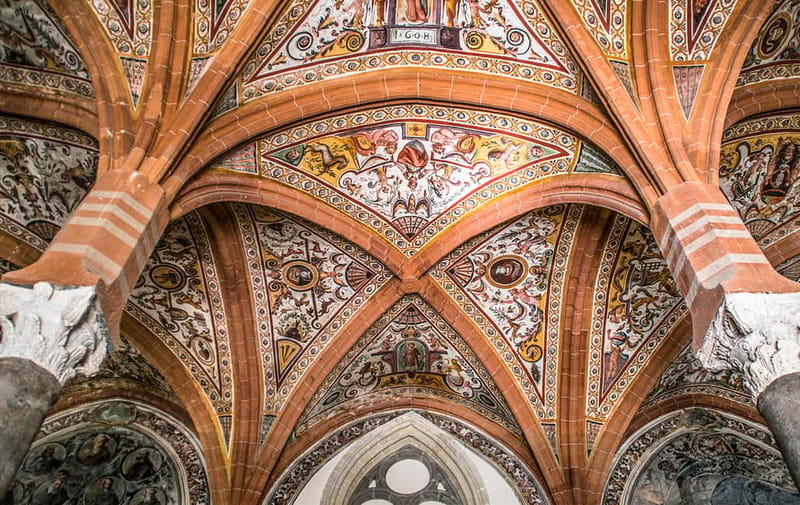
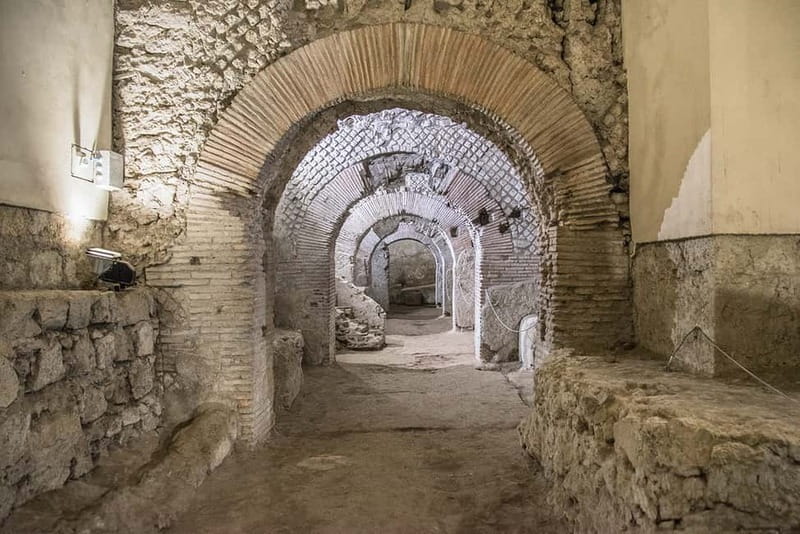
The central feature is the descent into Neapolis Sotterrata, the underground remains of the ancient Neapolis founded in 470 B.C. The name means buried Naples, and that is a useful way to understand the experience. You are not entering a separate cave system. You are going below the modern city to see pieces of the earlier settlement that survived beneath later construction.
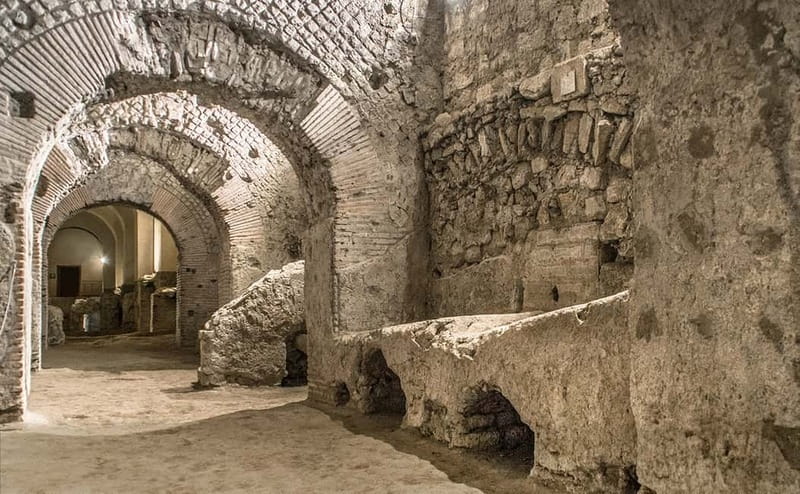
At roughly 10 meters underground, the atmosphere changes at once. You leave the decorated religious rooms and reach exposed archaeological remains. The route includes an ancient road and the Macellum, a Roman market that served as an important commercial area.
This is the part where a guide can make a real difference. The stones and walls are interesting, but without explanation you may not always know what each section did or how the spaces fit together. A free audio guide is available to download onsite. A guided tour costs €2 and can be booked at the complex.
I would seriously consider paying the extra €2 if you want the archaeological section to make sense. The added cost is small compared with the entrance price, and an explanation can turn a collection of old walls into a readable street and market. If you prefer moving at your own pace, the audio guide lets you stop when you wish.
Do not expect a huge underground route. The remains are impressive because of their position and preservation, not because they cover a large area. The visit does not include every part of Naples Underground, and you will not see the half-flooded subterranean route sometimes associated with that name. Here, the focus is the ancient city and its market beneath San Lorenzo.
That distinction matters when you compare tickets. If you want a long underground adventure with water-filled passages or a much broader network of tunnels, this is not the right choice. If you want to see a compact ancient market beneath a medieval church, it is a focused and worthwhile stop.
The underground section is also cooler than the streets above, which makes it especially pleasant on a hot day. Wear comfortable shoes and clothes, as requested for the visit, and take care on the transition between the different parts of the complex.
Same city, an entirely different sort of day:
- Naples: Catacombs of San Gennaro Entry Ticket & Guided Tour
★ 4.6 · 7,941 reviews - Naples: Downtown Tour with Veiled Christ & St Clare Tickets
★ 4.9 · 6,462 reviews - Naples: Pizza-Making Workshop with Drink and Appetizer
★ 4.9 · 5,411 reviews - Naples: Hop-on Hop-off Bus Tour 24-Hour Ticket
★ 4.3 · 5,157 reviews
Understanding the ancient Macellum
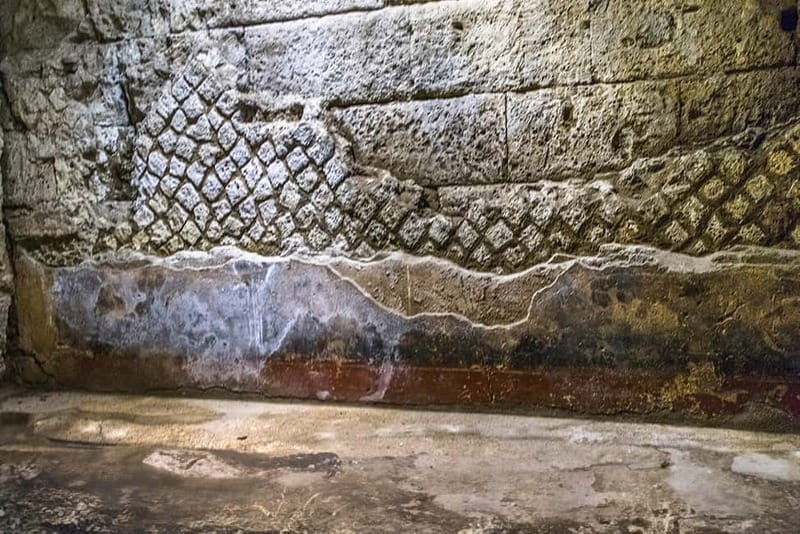
The Macellum is the most memorable archaeological feature because it gives the underground visit a clear purpose. Instead of looking at isolated fragments, you can follow the idea of a commercial center, with a road and market area tied to the daily life of ancient Naples.
The site is more than a collection of recovered artifacts. It shows how the city was organized and how ordinary commerce occupied the center of urban life. You can picture people moving along the road, entering market spaces, and carrying out the practical business that kept the city running.
The remains are described in English, which helps if you are visiting without a guide. Still, the presentation can feel limited if you expect a large number of connected rooms. I would treat the Macellum as a concentrated archaeological lesson, not an entire ancient city spread underground.
Some visitors find the section smaller than expected because it does not reveal an amphitheater or a broad stretch of subterranean Naples. That is a fair limitation. The advantage is that you can examine the preserved market without committing several hours to a large archaeological complex.
Why you should not skip the museum
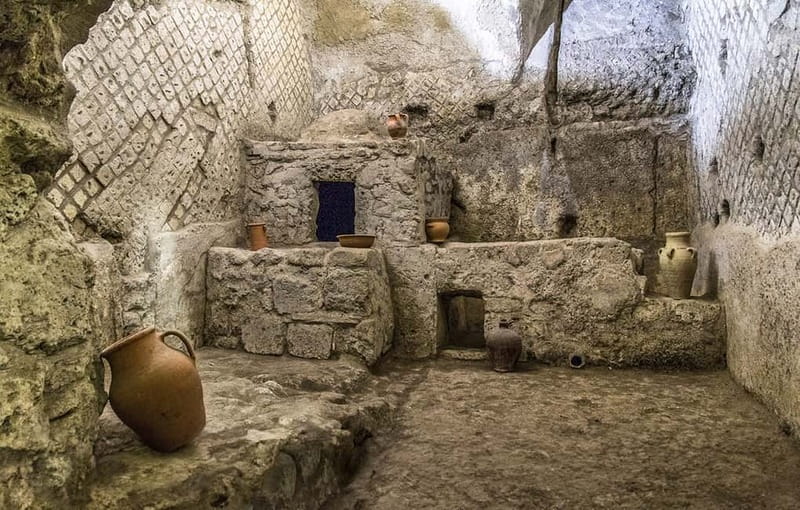
The museum is easy to overlook after the underground ruins, but it is one of the most useful parts of the visit. It presents a cross-section of Naples from the classical age through the nineteenth century, giving you a longer timeline than the Macellum alone can provide.
The underground site tells you about ancient urban life. The museum helps you understand what happened afterward and how Naples changed across many centuries. Relics and displays provide a bridge between the classical period, the religious complex, and the later city.
I would visit the museum either before the underground section, if you want background first, or afterward, if you prefer to see the ruins and then fill in the wider story. The second approach works well for me because the market gives you a strong starting point, while the museum adds context once you have seen the remains.
The museum also helps make the €10 ticket feel more worthwhile. If you only walk through the underground section, the price may seem high for a short archaeological visit. When you include the museum, cloister, Chapter Hall, and Sisto V Hall, you are paying for a small collection of connected historical spaces rather than one room below the church.
The free audio guide and the €2 guided tour
The free audio guide is available to download onsite in English or Italian. That is a useful inclusion, especially if you want information without joining a group or paying more.
I would download it before leaving the entrance area and check that it works. A phone-based guide is only helpful if the QR code opens properly and your device can play the material. If it fails, the rooms remain worth seeing, but you may find yourself asking what particular walls or artifacts represent.
The guided option costs €2 and can be arranged onsite. That small supplement is worth considering for the underground ruins, where an expert explanation can clarify the road, market, and Roman remains. The quality of any spoken tour depends on the guide and language available at that time, so English speakers should confirm the language before joining.
The host or greeter service is listed in English and Italian. If you are comfortable reading signs and moving independently, the ticket alone gives you flexibility. If ancient sites tend to blur together for you, take the guided option.
Price, time, and practical value
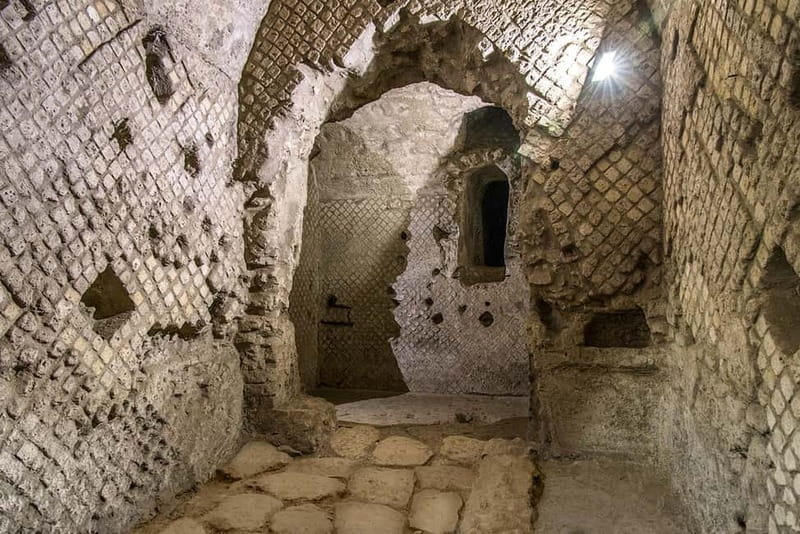
At $10 per person, the ticket is reasonably priced for the number of areas included. The best value comes from seeing the entire complex, not just making a quick descent underground.
The visit is valid for one day, with starting times based on availability. That gives you room to fit it around other plans in central Naples. You can also cancel up to 24 hours in advance for a full refund and reserve now while paying later, which is helpful when your schedule is still changing.
Transportation is not included, but the meeting point is the entrance at Piazza San Gaetano, 316. Food and drinks are also not included, though the central location makes it easy to continue your day elsewhere in Naples.
This is a good choice for a rainy afternoon because much of the visit takes place indoors. It also works during hot weather, when the underground section offers a cool change from the street. The attraction is wheelchair accessible, but the complex includes an underground route and historic rooms, so you may want to confirm the precise route with staff if you have specific mobility needs.
The overall rating is 4 out of 5 from 963 ratings, which fits the experience well. The strongest appeal is the mix of art, architecture, museum objects, and ancient ruins. The main weakness is that the underground section is more limited than the title may suggest.
Who will enjoy San Lorenzo Maggiore most
I would recommend this to you if you like seeing several layers of a city in one place. Naples is famous for its ability to place Greek, Roman, medieval, and later history close together, and San Lorenzo Maggiore makes that overlap easy to see.
It suits first-time visitors who want a manageable historical stop in the center. Families with older children may also appreciate the physical act of going below the church and walking along an ancient road, though the museum and frescoes may appeal more to adults.
Art lovers should allow extra time for Sisto V Hall and the religious rooms. Architecture fans will enjoy the Gothic portal and Chapter Hall. Archaeology fans should focus on the Macellum and consider the €2 guide.
I would not choose this as your only underground experience if your main goal is a large tunnel network, dramatic water-filled passages, or a long expedition below Naples. I would choose it if you want an archaeological site with a clear Roman market, plus a museum and historic rooms in the same ticket.
Should you book this Naples history visit?
Book it if you want a compact, central attraction that combines a Roman market beneath a church with Franciscan art, Gothic architecture, and a museum. The $10 price is fair when you visit all included sections, and the extra €2 guided tour can improve the underground experience.
Skip it if you expect a vast subterranean route or the half-flooded Naples Underground experience suggested by some similar names. For the best visit, enter at Piazza San Gaetano 316, check the audio guide before you start, do not skip the museum, and give yourself time to look up in Sisto V Hall before heading below street level.
FAQ
Where does the San Lorenzo Maggiore experience start?
The entrance is at Piazza San Gaetano, 316, in Naples.
What does the ticket include?
It includes the San Lorenzo Maggiore complex, the cloister, Chapter Hall, Sisto V Hall, museum, and entry to Neapolis Sotterrata.
Is entry to the Basilica of San Lorenzo Maggiore included?
Entrance to the basilica is free.
How far underground do you go?
The route descends approximately 10 meters underground.
What is Neapolis Sotterrata?
Neapolis Sotterrata is the underground archaeological area beneath the complex, where you can see remains of the ancient Greek-Roman city, including an ancient road and the Macellum market.
Is an audio guide available?
Yes. A free audio guide is available to download onsite in English or Italian.
Can I join a guided tour?
Yes. A guided tour is available to book onsite for €2.
Is the site wheelchair accessible?
Yes, the activity is listed as wheelchair accessible.
Can I cancel my booking?
Yes. You can cancel up to 24 hours in advance for a full refund.
Just added around Naples
- Naples: Guided Walking Tour★ 4.7 · 63 reviews
- Wine tasting in the Vesuvius National Park★ 3.5 · 4 reviews
- Naples: Pompeii and Vesuvius Skip-the-Line Day Trip★ 3.8 · 32 reviews
- Visit the Museum MANN with a professional guide★ 5.0 · 3 reviews
- Walking-tour of Naples hystorical Centre★ 4.4 · 4 reviews
- Vesuvius – Herculaneum – Pompeii Excavations Tour★ 4.2 · 9 reviews
- Pompeii: Vesuvius at Sunset★ 3.5 · 31 reviews
- Vesuvius and Herculaneum from Naples★ 3.7 · 29 reviews
Tickets, compared.
Catacombs of San Gennaro Entry Ticket & Guided Tour
Read our review →

The Bourbon Tunnel Guided Tour with Entrance Ticket
Read our review →
Galleria Borbonica Entrance Ticket in Standard Route
Read our review →
Capri Guided Tour with Ferry Tickets & Minibus
Read our review →