
Reviewed · NAPLES NATIONAL ARCHAEOLOGICAL MUSEUM TOURS
Naples: National Archaeological Museum Ticket & Audio App
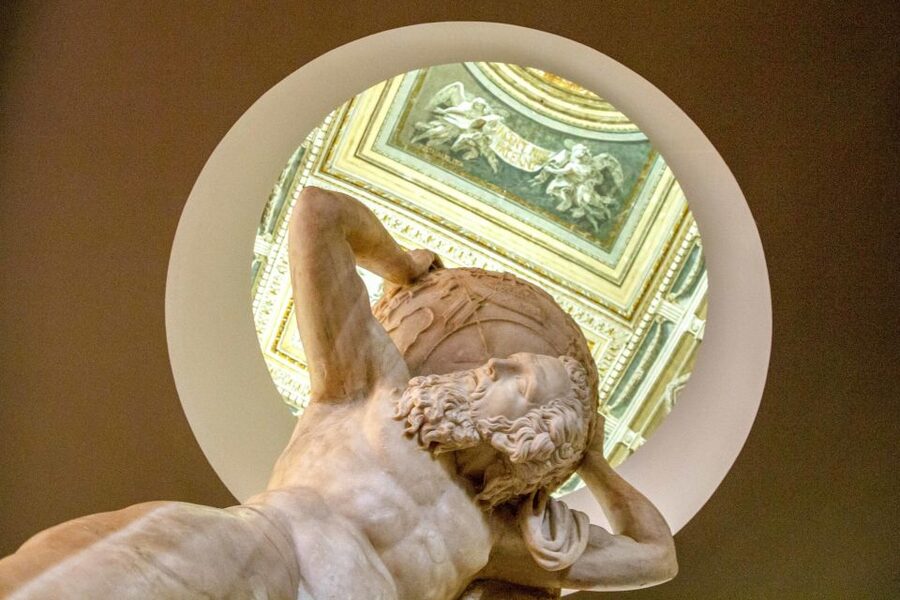
The most exciting part of this visit is seeing objects removed from Pompeii and Herculaneum up close: painted frescoes, mosaics, glass vessels, cooking pots, and small household pieces that make the ruined cities feel personal. The museum also holds the Farnese marbles and one of Europe’s great collections of Greco-Roman sculpture. Pompeii comes alive here, in a way the outdoor ruins alone cannot manage.
I like the museum’s sheer range, from grand marble statues to coins and everyday Roman objects. I also like the freedom of a one-day ticket, since you can set your own pace instead of being tied to a guide or fixed group. The main drawback is the digital audio app. It may take time to download, and some visitors found it less useful than the museum’s written explanations.
Key points to know before you go
- Pompeii and Herculaneum treasures: See frescoes, mosaics, glassware, cooking vessels, and other objects removed from the archaeological sites.
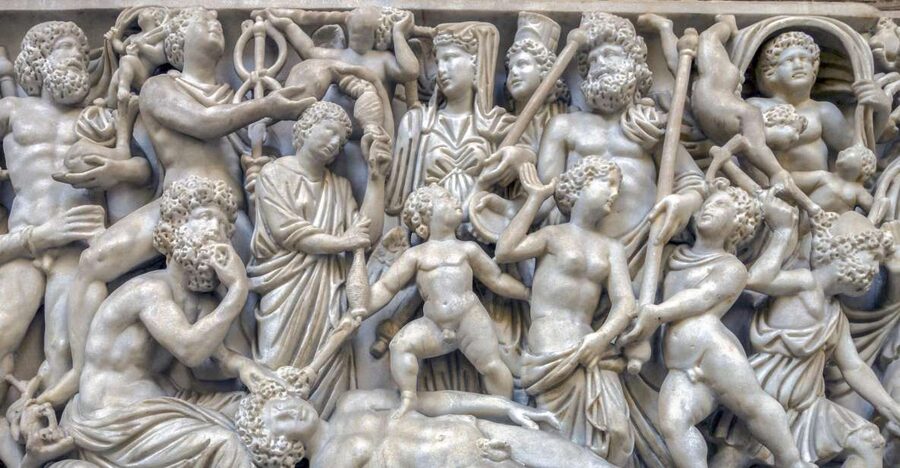
- The Farnese Collection: Expect major Greek and Roman sculpture, engraved gems, and the famous Farnese marbles.
- A self-guided museum visit: There is no live guide, so you can spend an hour or half a day inside according to your interests.
- The audio app is a bonus, not the main event: Downloading it may be slow, and it may not work as smoothly as a traditional museum audio guide.
- Plan for a long visit: Two and a half hours covers the main sights, while three to five hours gives the collection proper attention.
- Single entry only: Your ticket is valid for one entry on one day, with no reentry after you leave.
Why this museum matters before or after Pompeii
Naples National Archaeological Museum is the indoor counterpart to Pompeii and Herculaneum. At the archaeological sites, you see streets, villas, baths, and houses frozen by the eruption of Mount Vesuvius. Here, you see many of the objects taken from those places and protected indoors.
That pairing makes a real difference. A fresco inside the museum can help you understand the painted walls you pass at Pompeii. A cooking pot, glass vessel, or piece of furniture gives scale to the daily life hinted at by the buildings. The museum also includes models and video material connected with Pompeii, which can help explain the destruction that the ruins only partly show.
You do not need to visit Pompeii first. If your museum visit comes before the ruins, it gives you useful background and helps you recognize artistic styles and household objects later. If you visit afterward, the museum fills in the missing pieces. Many people find that the museum makes their Pompeii visit more meaningful, while the outdoor site gives the museum objects a clear home.
More archaeological museum tours:
- Naples: National Archaeological Museum of Naples Guided Tour
★ 4.8 · 498 reviews - Naples: National Archaeological Museum Tour & Digital Guide
★ 4.2 · 177 reviews - Naples: National Archaeological Museum audio guide
★ 4.0 · 155 reviews
Entering the Bourbon collection
The museum was founded by Charles III of Spain in the mid-18th century. Its central collection grew from the Farnese holdings, inherited by the Bourbon rulers and eventually brought together in Naples.
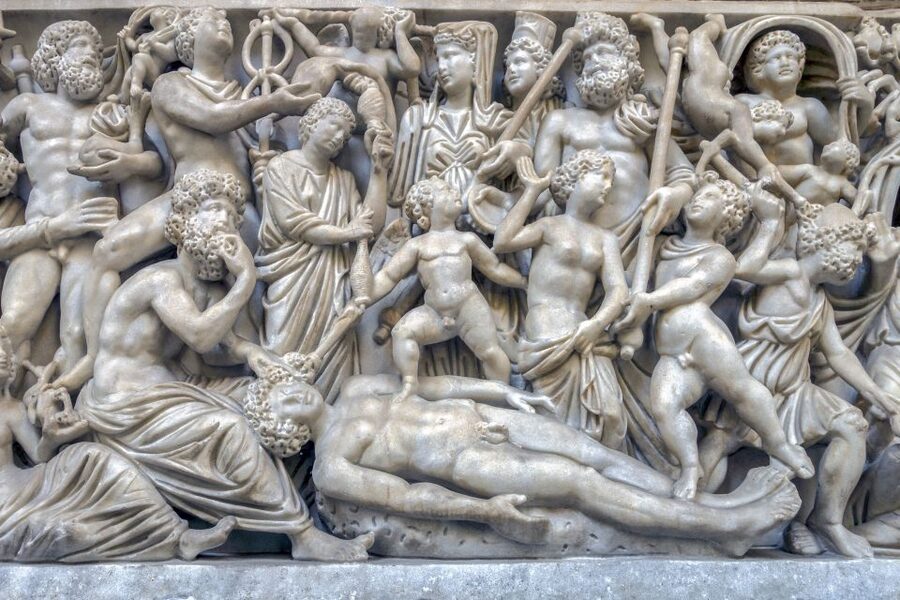
The Farnese Collection is the place to begin if monumental sculpture is your priority. You will find large Greco-Roman statues, the Farnese marbles, and engraved gems. These works show how Roman collectors admired, copied, and preserved Greek art, while also revealing the taste and ambition of the powerful families who gathered them.
The scale can be tiring. This is not a small museum where every room can be studied in detail during a quick stop. The collection rewards a plan. You might spend your first hour on the major sculpture galleries, then move to Pompeii objects and return to anything you missed.
The building itself adds to the experience. It provides broad museum rooms for large works, along with quieter spaces where smaller objects can be examined. Several people find it surprisingly calm inside, even though the city outside can feel hectic. That quiet matters after a morning on Naples streets or at the crowded archaeological sites.
Pompeii rooms: small objects with big impact
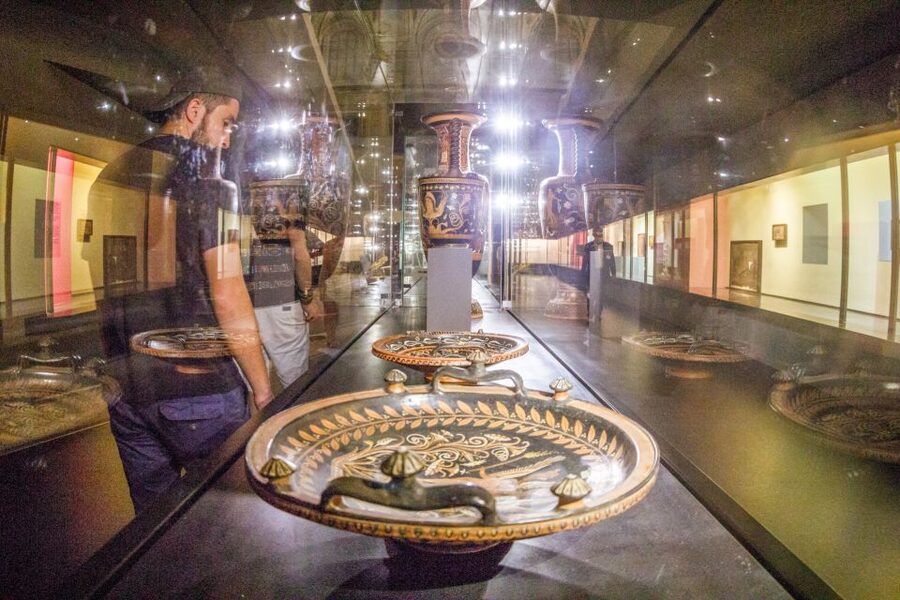
The Pompeii and Herculaneum displays are the heart of the visit for many people. You can see objects rescued from villas, shops, kitchens, and homes. The collection includes frescoes and mosaics, but the ordinary pieces may hold your attention longest.
A glass vessel or cooking pot tells you how Romans ate, stored food, and entertained themselves. These objects are not just decoration. They show the practical side of life in the towns around Vesuvius, where wealthy houses existed beside working kitchens and busy commercial spaces.
The museum also presents famous mosaics and wall paintings from sites that are now partly ruined, weathered, or difficult to read. Indoors, the colors and patterns are easier to study. If you have already walked through Pompeii, you will recognize the connection between the rooms you saw there and the objects displayed here.
Allow at least an hour for these galleries. If ancient daily life interests you, allow much longer. The museum’s Pompeii material can easily become the main event rather than a short stop between sculpture rooms.
The eruption through models and video
The museum includes a miniature model and video material related to Pompeii. These displays help you picture the town as a functioning place rather than a field of broken walls.
A model can show the scale and layout of buildings more clearly than a walk through the ruins. Video material can also provide a visual explanation of the eruption and its effect on the inhabitants. This is particularly useful if you have visited Pompeii without a guide or if the site felt difficult to understand room by room.
Do not expect a complete substitute for the archaeological site. The museum gives you objects and interpretation, while Pompeii gives you streets and buildings. They answer different questions, and together they create a fuller picture.
More museums and sites in Naples:
- Capodimonte Museum in Naples
★ 4.0 · 115 reviews - Sant’Aspreno ai Crociferi: Church & Jago Museum Guided Tour
★ 4.9 · 86 reviews - Skip the Line: National Archaeological Museum of Naples Entry Ticket
★ 3.5 · 82 reviews - National Archaeological Museum of Naples
★ 4.5 · 61 reviews
Roman sculpture and the Farnese marbles
The sculpture collection gives the museum its grandest moments. The Farnese holdings include major marble works and engraved gems, while other galleries contain sculptures connected with Roman public spaces and baths.
You might come for Pompeii and find yourself spending most of your time with the statues. The larger works are visually commanding, but take a moment to look at the smaller pieces as well. The engraved gems show a different kind of craftsmanship, with detail compressed into a tiny surface.
This section suits visitors who enjoy art museums, but you do not need specialist training to appreciate it. Read the labels selectively. Choose a few works that catch your eye instead of trying to absorb every date, name, and theory.
The collection can also be mentally tiring. One person may be satisfied after the key sculpture rooms, while another may want several hours. A sensible plan is to identify your priorities before entering, then treat anything else as extra.
Egyptian artifacts and the Secret Cabinet
The museum also has an Egyptian section. The supplied information notes that this area was closed until March 31, 2023, so you should check its current status before booking or visiting. Do not build your entire plan around it without confirming that it is open.
Another notable area is the celebrated Secret Cabinet, a collection connected with the erotic side of ancient Roman life. It offers a more revealing view of Roman society than the formal sculpture galleries alone.
The erotic material is historically useful because it shows that Roman art and decoration included subjects that modern museums sometimes present cautiously. The collection helps place sexuality within domestic decoration, humor, mythology, and private life. It is not simply a collection of shocking objects, and you can decide how much time you want to spend there.
The museum also includes a newer display on the history of coins. This is an easy section to overlook if you are rushing toward the big statues, but coins provide a compact record of rulers, symbols, trade, and political change. It is a good stop for anyone who prefers small objects and historical detail to monumental art.
How long should you stay?

The short answer is two and a half to three hours for the highlights. Several hours more will suit you if you want to read labels, study the sculpture galleries, and take your time with Pompeii and Herculaneum material.
A practical visit might look like this:
- Start with the major Farnese sculptures and Greco-Roman galleries.
- Move to the Pompeii and Herculaneum rooms while your attention is fresh.
- See the model and video presentation connected with Pompeii.
- Add the Secret Cabinet, coin display, and Egyptian section if open.
- Finish with a café or bookstore stop if you need a break.
The museum can be mentally exhausting because the collection is so large. That is not a reason to rush. It is better to see the sections that matter most to you than to walk through every room without remembering much.
The museum has a café, and the available information indicates that prices were considered reasonable. That gives you a useful pause during a three or four-hour visit. A bookstore is also available, which can help if you want a guidebook or a more detailed look at Pompeii after seeing the objects.
The digital audio app: useful extra or unnecessary add-on?
The ticket includes a digital audio guide accessed through a link. You use your smartphone rather than joining a live tour, which means you can stop, skip sections, and move at your own speed.
The weakness is reliability. The app may take a while to download, and some users found that it did not function well enough to keep using. Others simply toured the museum without it because the displays include written information in English and Italian.
I would treat the app as a possible convenience, not the reason to buy this ticket. Download it before you arrive if you can, and bring a charged phone with enough storage and data access. If the app proves awkward, you have not lost the main value of the visit: the museum admission and the objects themselves.
There is no live guide included. That suits you if you prefer independence, but a guided tour would be better if you want a clear narrative connecting Greek art, Roman collecting, Pompeii, Herculaneum, and the Bourbon family.
Ticket, timing, and arrival advice
The price is $29 per person. That is fair if you plan to stay for several hours and care about ancient art, Pompeii, or Roman daily life. It is less attractive for a quick one-hour visit, since the museum is large and the ticket only covers one entry.
You exchange your smartphone voucher at the Museo Archeologico di Napoli ticket office for the official entrance ticket. It may seem odd to show a digital voucher and then receive a paper ticket, but allow time for that exchange before heading to security.
Some people found no queue at the ticket counter, especially in the off-season. At other times, lines may be long, and booking ahead can save uncertainty. The ticket does not guarantee that you will walk straight into the galleries, since you still need to exchange the voucher and pass a security check.
Arrive near opening time if you want the calmest visit and the best chance of seeing the major rooms with fewer people. Crowds can build later, and the museum is much easier to enjoy when you can stop in front of a statue or mosaic without blocking the room.
Bring a passport or identity card. The ticket is for one entry only, so take care of food, restroom, and café needs before leaving the building. Reentry is not included.
The museum is wheelchair accessible, but the Vittorio Emanuele apartments are not accessible to people with impaired mobility. If those apartments are important to you, check the current route and access arrangements before you go.
Who will get the most from this visit?
I recommend this museum strongly if you are visiting Pompeii or Herculaneum. It is also a good choice for anyone who enjoys Greek and Roman sculpture, frescoes, mosaics, coins, or ancient domestic life.
Families may find the large statues and Pompeii objects more engaging than a museum filled only with formal paintings. The model and video can also give younger visitors a clearer sense of what happened at Pompeii. Still, the size of the museum means you should keep the visit focused rather than expecting everyone to enjoy every room.
Cruise passengers may find the museum practical because it can be reached on foot from the cruise port, according to the available visitor information. Check your ship’s departure time carefully, since a three-hour museum visit can easily become four or five hours with the ticket exchange, security, café, and return walk.
This is not the best pick if you want a live guide, a tightly organized tour, or a quick attraction that takes less than an hour. The audio app does not replace a person explaining the collection, and the museum rewards visitors who choose their own priorities.
Should you book the Naples Archaeological Museum ticket?
Book it if Pompeii or Herculaneum is part of your trip, especially if you have three or more hours available. The combination of frescoes, mosaics, household objects, Farnese sculpture, Roman erotic art, coins, and Egyptian material gives you far more than a quick look at ancient statues.
The $29 price makes sense when you use the full day validity, although you cannot reenter after leaving. Reserve ahead during busy periods, arrive early, and treat the audio app as optional. If you want a live explanation, buy or arrange a separate guided tour instead.
For most visitors interested in Campania’s ancient sites, this is one of the strongest museum stops in Naples. See Pompeii outdoors, then come here for the objects that make those empty rooms feel lived in.
FAQ
How long is the ticket valid?
The ticket is valid for one day. It allows a single entry and does not include reentry after you leave the museum.
Is a guided tour included?
No. The ticket includes museum admission and a digital audio guide, but not a live guided tour.
How do I enter the museum with the smartphone voucher?
You must exchange your smartphone voucher at the Museo Archeologico di Napoli ticket office for the official entrance ticket. You also need to pass through security.
What should I bring?
Bring your passport or identity card, along with your smartphone if you plan to use the digital audio guide.
Is the museum wheelchair accessible?
The activity is listed as wheelchair accessible. The Vittorio Emanuele apartments are not accessible to people with impaired mobility.
Is the Egyptian section open?
The supplied information notes that the Egyptian section was closed until March 31, 2023. Check its current status before your visit because access may have changed.
Can I cancel the booking?
You can cancel up to 24 hours in advance for a full refund. A reserve now and pay later option is also available.
More Audio Tours in Naples
- Vesuvius National Park Skip-The-Line Ticket and Audio Guide
★ 3.4 · 141 reviews - Interactive audio guide for the historic center of Naples
★ 5.0 · 43 reviews - Mount Vesuvius Skip the Line Ticket + Multilingual Audio Guide
★ 4.0 · 32 reviews - Skip the Line Ticket to Herculaneum with Audio Guide
★ 4.0 · 20 reviews
More Self-Guided Tours in Naples
- Pompeii: Skip-the-Line Entry Ticket with Audio Guide or Tour
★ 4.1 · 1,364 reviews - Herculaneum: Skip-the-Line Entry Ticket with Audio Guide
★ 4.3 · 870 reviews - Naples: Pompeii Self Guided Audio Tour
★ 3.9 · 211 reviews - Naples: Royal Palace Entry Ticket with Digital Audio Guide
★ 4.1 · 146 reviews
Just added around Naples
- Naples: Guided Walking Tour★ 4.7 · 63 reviews
- Wine tasting in the Vesuvius National Park★ 3.5 · 4 reviews
- Naples: Pompeii and Vesuvius Skip-the-Line Day Trip★ 3.8 · 32 reviews
- Visit the Museum MANN with a professional guide★ 5.0 · 3 reviews
- Walking-tour of Naples hystorical Centre★ 4.4 · 4 reviews
- Vesuvius – Herculaneum – Pompeii Excavations Tour★ 4.2 · 9 reviews
- Pompeii: Vesuvius at Sunset★ 3.5 · 31 reviews
- Vesuvius and Herculaneum from Naples★ 3.7 · 29 reviews
Naples National Archaeological Museum Tours, compared.
National Archaeological Museum of Naples Guided Tour
Read our review →
National Archaeological Museum Tour & Digital Guide
Read our review →

Skip the Line: National Archaeological Museum of Naples Entry Ticket
Read our review →

Naples Archaeological Museum 2-Hour Guided Private Tour
Read our review →
3-Day Pass, Pompeii, & Archeological Museum Included
Read our review →
Private Tour of the National Archaeological Museum of Naples
Read our review →Browse the lists this tour appears in