
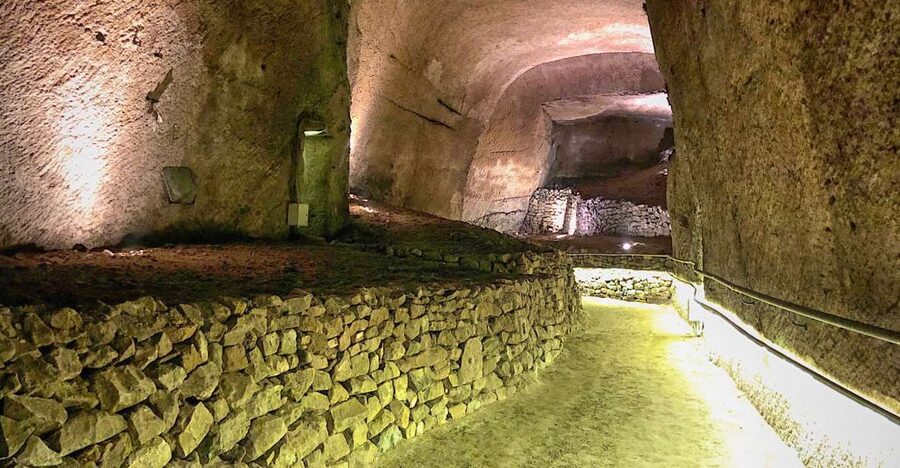
Reviewed · MUSEUMS
Naples: LAPIS Museum Guided Visit in Italian
Naples keeps some of its most remarkable engineering under your feet. This 75-minute visit to the Lapis Museum takes you below the Basilica of Pietrasanta, through ancient Greco-Roman cisterns and water channels, then down to 35 meters underground by archaeological elevator. I like the unusual setting and the clear sense of time travel: the elevator ride takes only about 20 seconds, but the site reaches roughly 2,000 years into Naples’ past.
I also like the small group limit of 10, which should make it easier to hear the Italian-speaking guide in the underground rooms. The lighting gives the vaulted spaces real drama, though this is not a good choice if you have mobility limitations or use a wheelchair.
Key points to know
- A 20-second elevator ride reaches 35 meters below Naples, linking the basilica crypt with the underground aqueducts.
- The route passes through Greco-Roman cisterns that still contain water and runoff.
- The Submerged Decumanus adds a distinctly Neapolitan setting, beneath a basilica in the historic center.
- Cosimo Fanzago’s 17th-century church sits above an older sacred site, built on the remains of an ancient temple to Diana.
- The group is limited to 10 people, a useful size for a guided visit in echoing underground chambers.
- The tour is conducted in Italian, so a basic understanding of the language will help you get more from the explanations.
Entering the Basilica of Pietrasanta in Naples
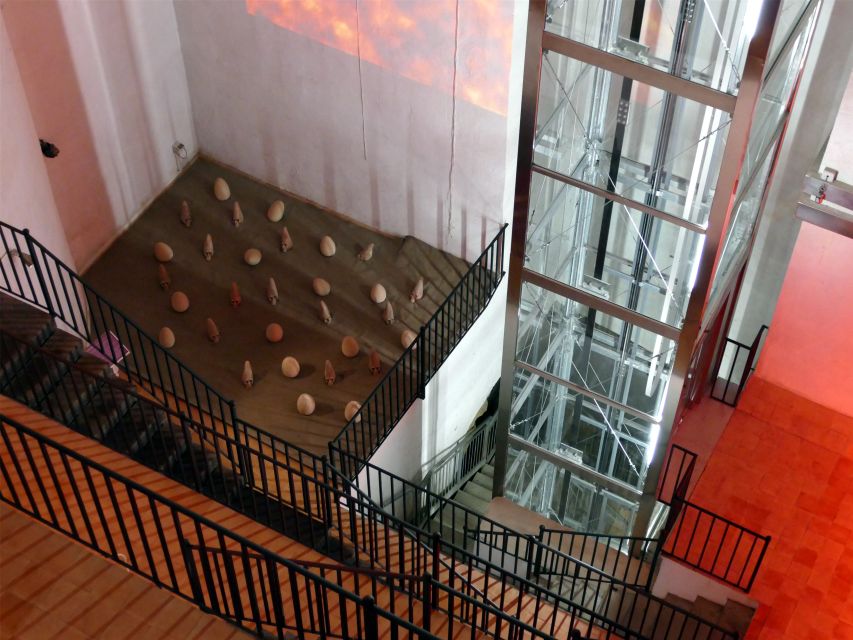
The visit begins at the Basilica of Pietrasanta, now home to the Lapis Museum. The building you see above ground is only part of the story. Beneath it lies a network of underground spaces shaped by water, religion, construction, and the long growth of Naples.
The basilica itself was built in the mid-17th century by architect Cosimo Fanzago. It occupies a site linked to the ancient Temple of Diana, giving the visit several layers of history before you even reach the cisterns. I like this setup because the underground route is not an isolated attraction. It belongs to the same old urban fabric that surrounds you in central Naples.
The Water Museum serves as the main hub for the underground route. You are not simply walking into a dark basement to see a few old walls. The visit presents the water system as a piece of city infrastructure, showing how people stored, moved, and managed water below the streets.
That context matters. Naples can feel visually overwhelming at street level, with churches, narrow lanes, traffic, and layers of buildings competing for your attention. Underground, the focus narrows. You can look closely at the vaults, passages, and masonry while your guide explains how the spaces fit together.
More museums and sites in Naples:
- Naples: National Archaeological Museum Ticket & Audio App
★ 4.4 · 617 reviews - Naples: National Archaeological Museum of Naples Guided Tour
★ 4.8 · 498 reviews - Naples: National Archaeological Museum Tour & Digital Guide
★ 4.2 · 177 reviews
The archaeological elevator down to 35 meters
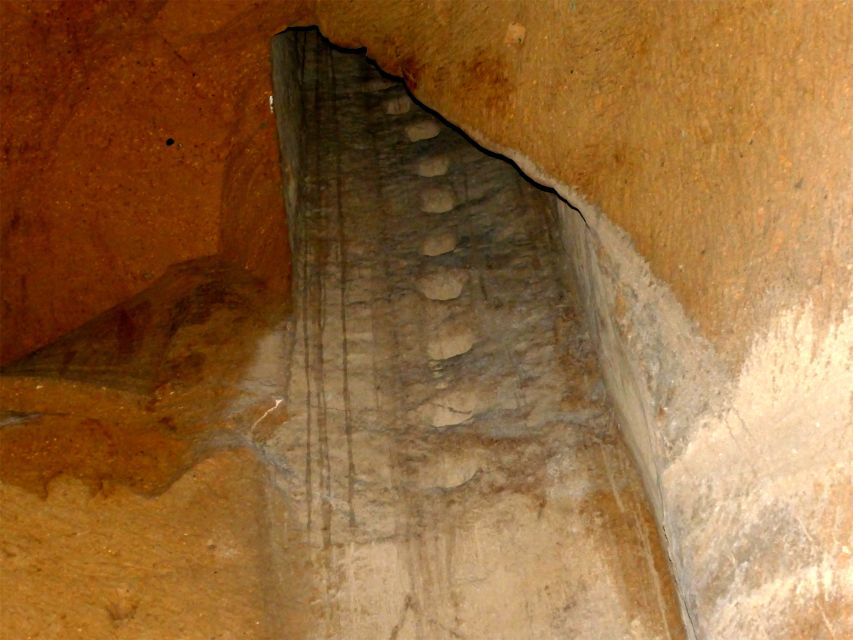
One of the most memorable parts of the visit comes before the main walk. An archaeological elevator connects the crypt to the subsoil, carrying you down to a depth of 35 meters in about 20 seconds.
That short ride gives the tour a useful sense of scale. You are not merely entering a shallow basement. You are moving through several levels of Naples, from the basilica above to a much older underground world below. The description of traveling 2,000 years back in time is poetic, but it also captures the appeal of the route.
The elevator is a practical feature as well as a dramatic one. Without it, reaching the underground levels would require a much longer route through stairs or narrow access points. Still, you should not assume that the lift makes the entire visit suitable for everyone. The activity is specifically not suitable for people with mobility impairments or wheelchair users.
If you are comfortable walking through an underground archaeological site but have concerns about access, contact the activity provider on the day of the tour for assistance and current information. The supplied details do not give a full list of stairways, surfaces, or rest points, so it is best to ask before booking.
Greco-Roman cisterns and the Water Museum
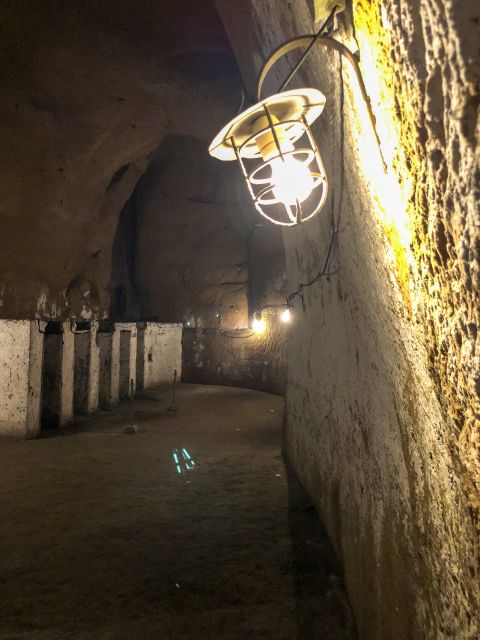
The main attraction is the network of ancient cisterns. These spaces formed part of Naples’ hydraulic system, allowing water to be collected, stored, and directed through the city.
I find this type of site especially useful for understanding a city. A grand church tells you about public worship and artistic ambition. An aqueduct or cistern tells you how daily life worked. Water had to be gathered and controlled, and underground engineering made that possible in a dense ancient city.
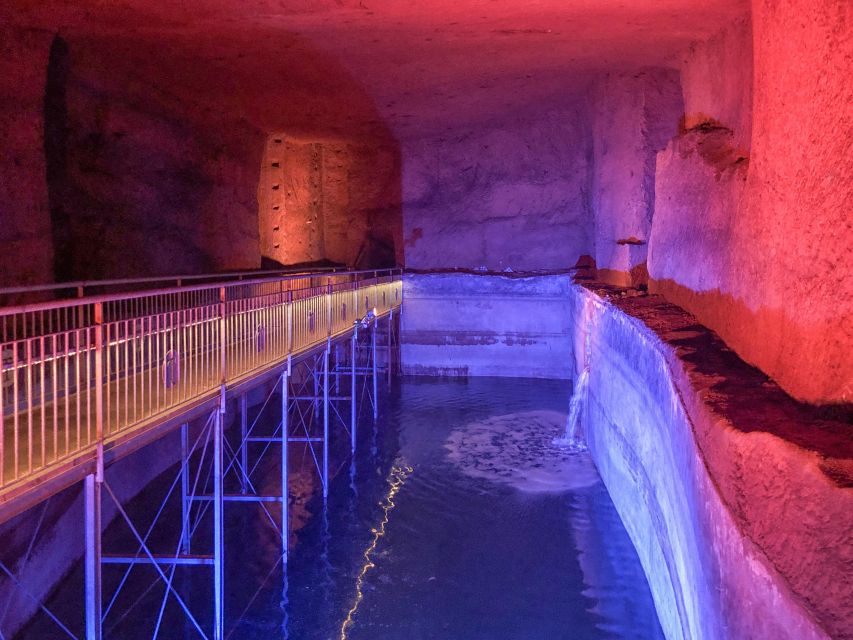
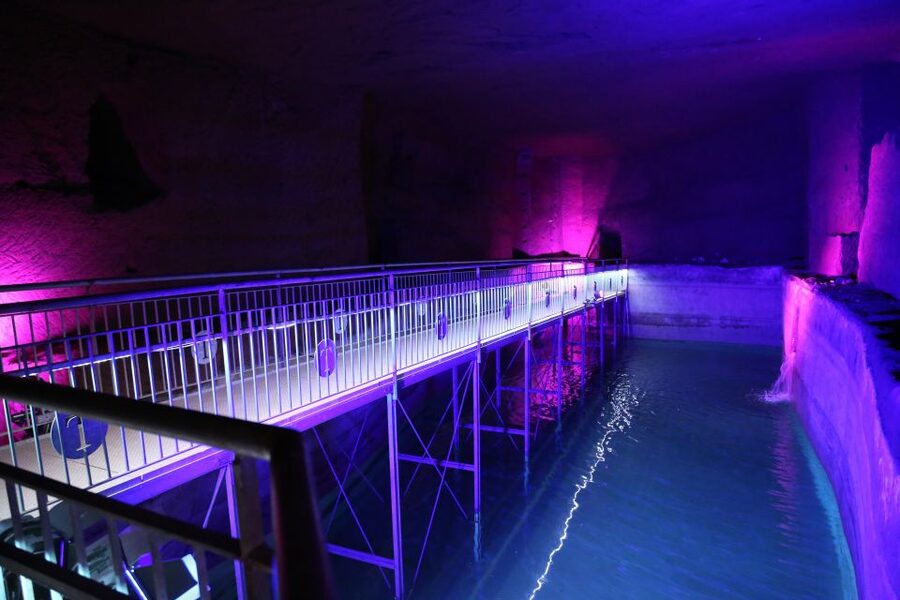
The cisterns are not presented as dry ruins. They now contain water and runoff, which gives the route a stronger connection to its original purpose. That also means the atmosphere may feel damp and enclosed. You should expect an underground setting rather than a polished gallery with wide, open rooms.
The route is enhanced by a technical lighting system. Colored lights pick out the volumes, arches, and vaulted ceilings, helping you see shapes that might otherwise disappear in the darkness. This lighting is part of the presentation, not a replacement for the archaeology. It makes the underground forms easier to read and gives the rooms a more theatrical mood.
I would keep your expectations balanced. The lighting can make the visit more striking, but this is still a historical infrastructure site. The appeal comes from the combination of ancient construction, water, darkness, and explanation. If you prefer archaeology in an untouched, minimally presented state, the colored lighting may feel a little staged.
The Submerged Decumanus beneath the city
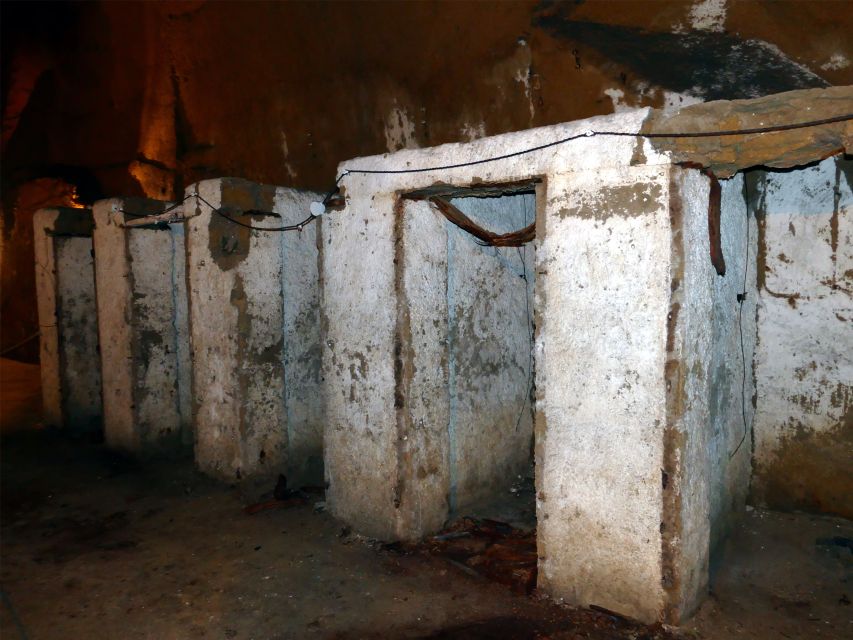
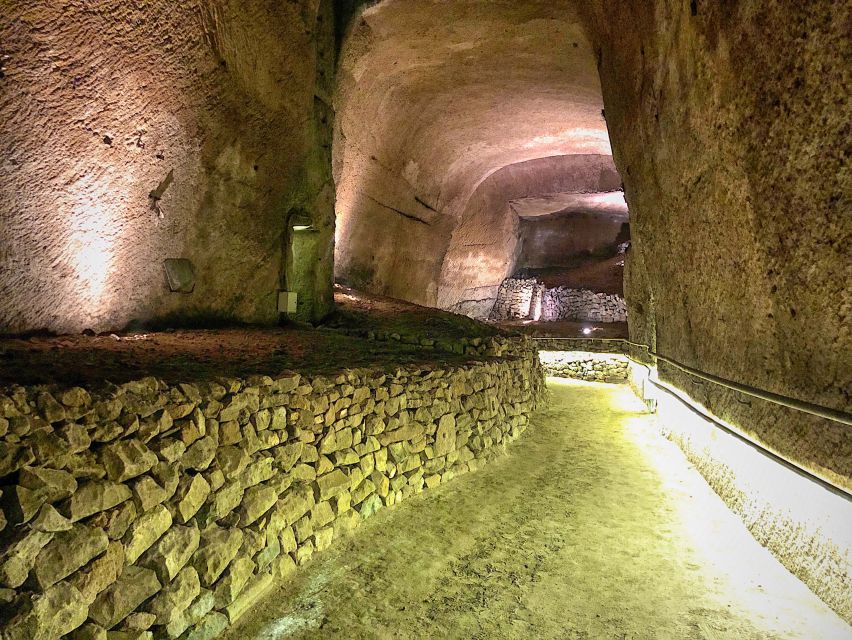
The underground route is known as the Submerged Decumanus. A decumanus was an east-west street in a Roman city, and the name points to the way Naples preserves traces of its ancient street plan below later construction.
The route’s name helps explain what makes the visit different from a standard museum stop. You are not only viewing objects in display cases. You are moving through the physical remains of a city, with later buildings and modern life above you.
The word submerged also fits the atmosphere. Water remains part of the underground setting, and the lighting draws attention to the relationship between the cisterns, channels, and vaulted spaces. I like that the route uses the site’s natural qualities rather than trying to turn it into a conventional indoor attraction.
Your guide’s role matters here. The architecture may be impressive, but underground rooms can be hard to interpret on your own. A prepared Italian-speaking guide can point out the changes in construction, explain the water system, and connect the basilica above with the remains below. The available feedback gives particular emphasis to the guide’s preparation and to the way the visit presents Naples from a different angle.
Since no guide names are provided, you cannot request a particular guide in advance based on the available information. The important point is the language: this tour is conducted in Italian, and the explanations are a central part of the visit.
A few more Naples outings worth a look
- From Naples: Pompeii Ruins & Mount Vesuvius Day Tour
★ 4.3 · 11,459 reviews - From Naples: Sorrento, Positano and Amalfi Full-Day Tour
★ 4.6 · 10,988 reviews - From Naples: Sorrento, Positano & Amalfi Coast – Small Group Tour
★ 5.0 · 8,643 reviews - Naples: Catacombs of San Gennaro Entry Ticket & Guided Tour
★ 4.6 · 7,941 reviews
What the 75-minute schedule means for you
Seventy-five minutes is a good length for this kind of underground route. It gives you enough time to descend, hear the historical explanation, walk through the water spaces, and look at the lighting without turning the visit into a half-day commitment.
I would place this tour between other central Naples activities rather than treating it as your only major sightseeing event. The duration leaves room for a church visit, a meal, or another museum before or after it. The fixed starting time matters, so check availability when you choose your date.
The small group limit of 10 is another plus. In an underground site with echoing walls, a large crowd can make instructions and explanations difficult to follow. A smaller group should provide a calmer visit and a better chance to see the illuminated details without people constantly blocking your view.
That said, small does not mean private. You will still share the route with other participants, and the experience follows a set path. If you want to linger over one particular chamber or photograph every angle, the guide may need to keep the group moving.
Is $15 good value?
At $15 per person, I consider this a strong-value visit if you are interested in Naples’ older layers and urban engineering. Admission and an Italian-speaking guide are included, and the tour combines a historic basilica, a museum, a working water environment, and a 35-meter descent.
The price is especially reasonable for a 75-minute guided route in the historic center. You are paying for access to a place that is not simply open for casual wandering. The guide helps you understand why the cisterns matter, while the elevator and lighting make the underground route possible and easier to experience.
The value drops if you do not understand Italian. You can still see the spaces, water, vaults, and lights, but much of the historical meaning comes through the guide. This is not advertised as a multilingual tour, and the listed language is Italian only.
I would also avoid judging the value by the number of objects on display. The Lapis Museum route is about space, structure, and atmosphere. It is a good buy for someone who enjoys unusual archaeological settings. It is less suitable for someone looking for a large collection of artifacts or an independent museum visit.
Who will enjoy the Lapis Museum most?
I would recommend this visit to you if you like the less obvious side of a city. Naples is famous for churches, art, food, and street life, but the water system reveals how the city worked below all of that. The tour gives you a fresh view without taking an entire day.
It also suits people who enjoy guided interpretation. The cisterns and underground passages may be visually appealing on their own, but the route makes more sense when someone explains the water engineering and the layers of construction.
You should think twice if you dislike enclosed spaces, damp underground settings, or theatrical colored lighting. The supplied information does not describe the full width of every passage or the exact walking surface, so you should ask the provider if you have concerns about confined areas.
The tour is not suitable for wheelchair users or people with mobility impairments. Even with the archaeological elevator, the access arrangements do not meet the stated needs of those visitors.
Practical booking advice for a small Italian tour
Book no later than 24 hours before the desired visit. This is a firm booking condition, so do not leave it until the last minute.
The tour includes free cancellation up to 24 hours before the start time for a full refund. You can also reserve now and pay later, which is useful if you are still arranging your Naples schedule.
For help at the meeting point, delays, or a change in entrance time, use the mobile phone contact supplied for the day of the tour. Since the available information does not provide the number itself, keep the contact details from your reservation accessible.
Plan to arrive with enough time to find the basilica. A late arrival could be more troublesome here than at an open-air sight because the route has a fixed start and uses an elevator to connect separate levels.
Should you book the Naples Lapis Museum visit?
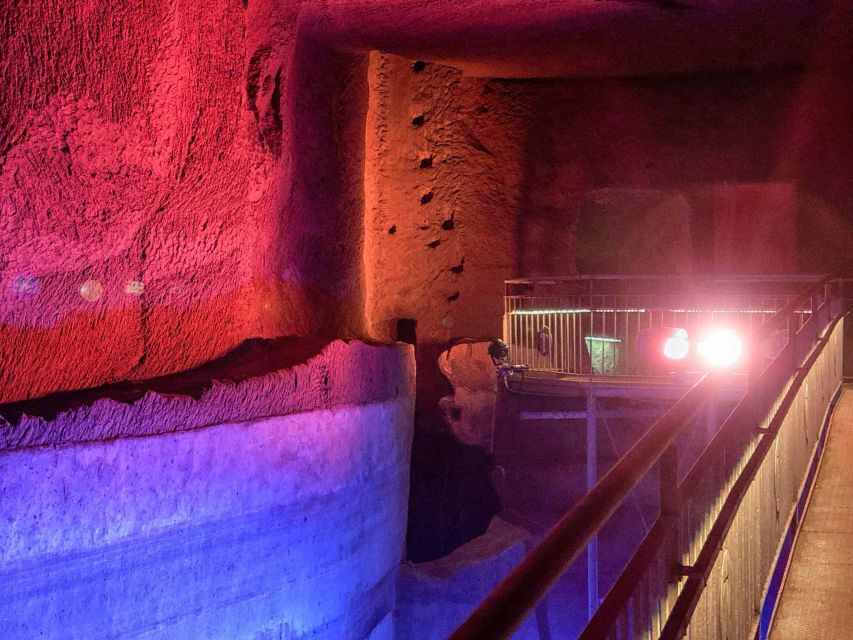
Book it if you want a short, unusual, and well-priced look beneath Naples. The Greco-Roman cisterns, active water and runoff, colored lighting, and rapid descent to 35 meters give the visit a clear identity. It is not just another church interior.
I would make it a priority for Italian speakers, history fans, and anyone who has already seen the main churches and wants a different view of the city. The strongest reasons to go are the prepared guide, the small group, and the chance to see ancient hydraulic works in their original underground setting.
Skip it if you need step-free access throughout, want a multilingual tour, or prefer a traditional museum filled with objects. For everyone else, $15 buys a focused 75 minutes and a memorable look at the Naples beneath Naples.
FAQ
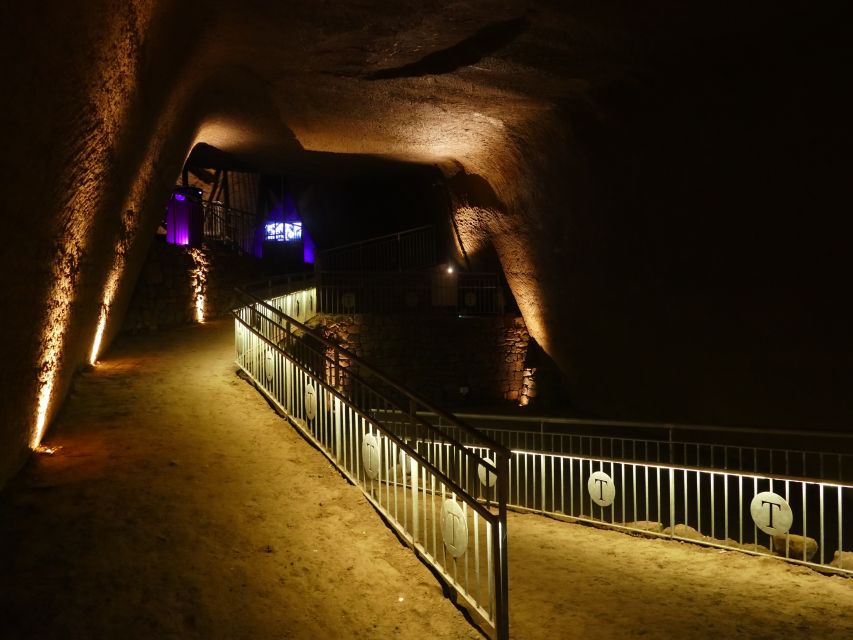
Where does the Lapis Museum tour take place?
The tour takes place beneath the Basilica of Pietrasanta in Naples, in the historic center. The underground route is connected with the Water Museum and the Submerged Decumanus.
How long does the visit last?
The visit lasts 75 minutes.
How far underground does the tour go?
The archaeological elevator descends to a depth of 35 meters below the basilica.
How long does the elevator ride take?
The elevator connects the crypt with the underground level in about 20 seconds.
What language is the tour conducted in?
The live guided tour is conducted in Italian.
How large is the group?
The tour is limited to 10 participants.
Is the tour suitable for wheelchair users?
No. The activity is listed as unsuitable for wheelchair users and people with mobility impairments.
How late can I book the visit?
The experience must be booked no later than 24 hours before your desired visit. You can cancel up to 24 hours in advance for a full refund.
Just added around Naples
- Wine tasting in the Vesuvius National Park★ 3.5 · 4 reviews
- Naples: Guided Walking Tour★ 4.7 · 63 reviews
- Naples: Pompeii and Vesuvius Skip-the-Line Day Trip★ 3.8 · 32 reviews
- Visit the Museum MANN with a professional guide★ 5.0 · 3 reviews
- Walking-tour of Naples hystorical Centre★ 4.4 · 4 reviews
- Vesuvius – Herculaneum – Pompeii Excavations Tour★ 4.2 · 9 reviews
- Pompeii: Vesuvius at Sunset★ 3.5 · 31 reviews
- Vesuvius and Herculaneum from Naples★ 3.7 · 29 reviews
Museums, compared.
National Archaeological Museum Ticket & Audio App
Read our review →
National Archaeological Museum of Naples Guided Tour
Read our review →
National Archaeological Museum Tour & Digital Guide
Read our review →


Sant’Aspreno ai Crociferi: Church & Jago Museum Guided Tour
Read our review →
Skip the Line: National Archaeological Museum of Naples Entry Ticket
Read our review →
Browse the lists this tour appears in