
Reviewed · MUSEUMS
Visit to the Lapis Water Museum in Spanish
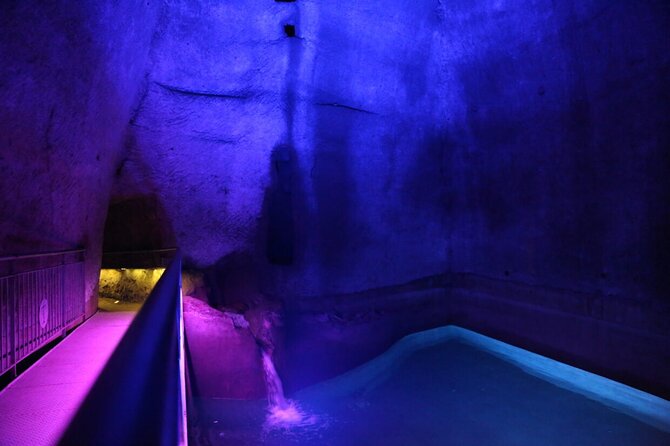
Naples becomes much easier to understand once you see what lies under its streets. This Spanish-language visit to the Lapis Water Museum takes you 35 meters below ground, through Greek and Roman waterworks, old cisterns, and rooms used as shelters during the Second World War.
I like the clear meeting point in Piazza Dante, and I like that the tour ends inside the museum rather than sending you back across town. The ancient aqueducts and the huge Prince’s Pool give the visit real substance. The drawback is the short length: 75 minutes goes quickly, and this is not the right choice if you want a long, unhurried archaeological visit.
Key points to know before booking
- Spanish guided tour: The experience is conducted in Spanish, with the group meeting first in Piazza Dante.
- 35 meters underground: You descend into the old water system beneath the Pietrasanta complex.
- Greek and Roman remains: The route includes aqueducts and cisterns linked to ancient Neapolis.
- Second World War shelters: You see spaces where Neapolitans sought refuge during bombing.
- Small maximum group: The tour allows up to 20 people, which should make the guide easier to hear.
- 75-minute visit: The price is $46.34 per person, so the value rests mainly in the guided interpretation rather than time spent inside.
From Piazza Dante to the underground museum
Your visit begins at Piazza Dante, a useful central meeting point in Naples. The guide waits there at your selected time, and the group walks together to Piazzetta Pietrasanta 17, where the Lapis Water Museum is located.
That short transfer matters. You do not have to find an unfamiliar entrance on your own, and the walk gives the tour a proper sense of place. You move from one of Naples’s central squares into the Pietrasanta complex, where the city’s surface history and underground story meet.
The tour is offered in Spanish, so you should be comfortable following a spoken explanation in that language. The maximum group size is 20 people. That is not a private tour, but it is small enough to keep the visit more personal than a large city excursion.
Be ready to start on time. The group leaves Piazza Dante once the required number of participants has gathered. If you arrive late, you may miss the transfer to the museum.
More museums and sites in Naples:
- Naples: National Archaeological Museum Ticket & Audio App
★ 4.4 · 617 reviews - Naples: National Archaeological Museum of Naples Guided Tour
★ 4.8 · 498 reviews - Naples: National Archaeological Museum Tour & Digital Guide
★ 4.2 · 177 reviews
The Pietrasanta complex and Naples’s earliest layers
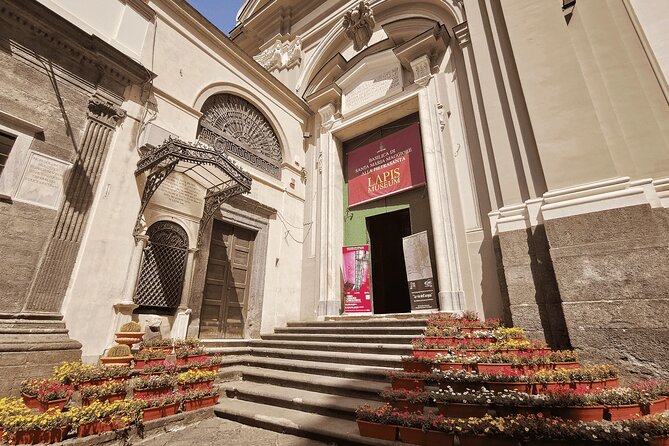
The first part of the visit takes place in the Basilica of Santa Maria della Pietrasanta. The description connects this site with the ancient origins of Naples and with the name Partenope, used by the first settlers for the city.
This is an important introduction because the underground rooms are not an isolated attraction. They sit below a place shaped by many periods of Neapolitan life. You begin with the basilica and its chapels, then move downward into the infrastructure that helped the ancient city function.
I like this order. The church gives you a visible point of reference before the stairs lead you below street level. Without that introduction, the aqueducts might feel like a separate archaeological stop. Here, the route ties the remains to the city above them.
The Pietrasanta setting also adds architectural variety to a short tour. You get a church complex, ancient engineering, and wartime history in one compact visit. That is a good use of time for a first visit to Naples, especially if you want more than the usual churches and piazzas.
Descending 35 meters beneath Naples
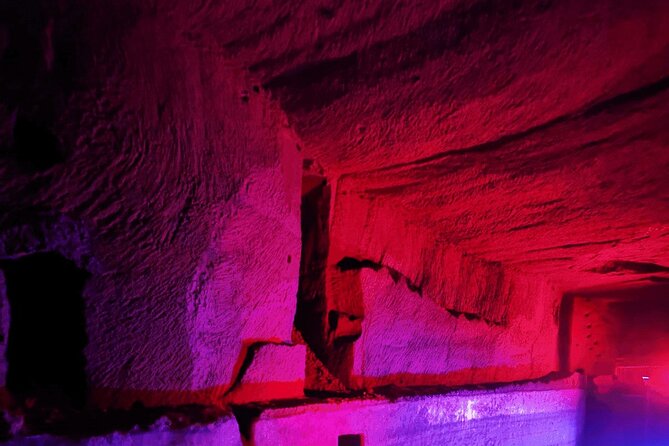
The main event is the descent to the deepest part of the city, about 35 meters below the surface. The change in atmosphere is central to the experience. Above ground, Naples can feel crowded and noisy. Below ground, the focus shifts to stone, water channels, cisterns, and the weight of the city built overhead.
The museum project began in 2021, with the goal of bringing ancient water cisterns back into use as a museum setting. It was developed with a Neapolitan water company, and the route includes recreated streams and cistern features intended to show how the water system worked in earlier times.
That reconstruction gives you more than a set of dry ruins. You can better picture the practical role of the underground spaces. These were not simply storage rooms placed beneath the city. Water collection and distribution were basic to urban life, and the old system helps explain how Neapolis supported its population.
The underground setting is also a reminder that Naples has been built layer upon layer. Ancient Greek and Roman structures, later religious buildings, and modern city life occupy the same vertical space. You are not just looking at an old cistern. You are looking at one part of a much larger city structure.
Greek and Roman aqueducts in the Lapis Water Museum
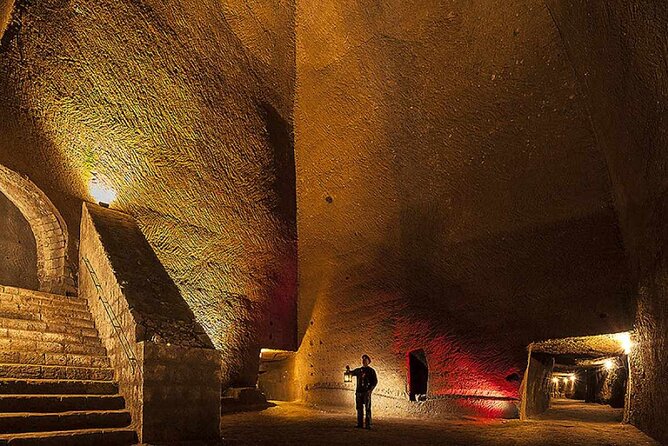
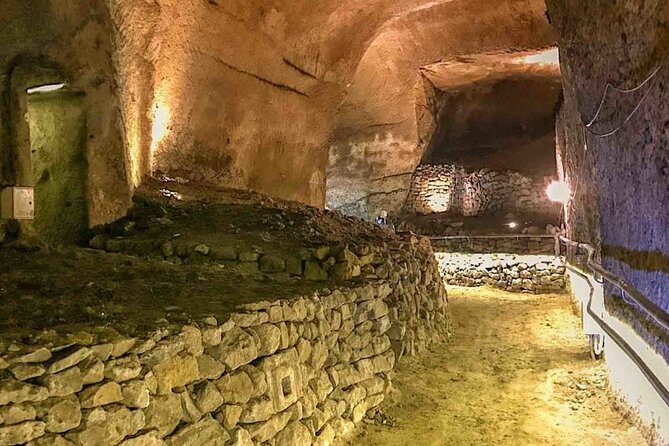
The route includes the Greek and Roman aqueduct of ancient Neapolis. These remains are the strongest reason to choose this visit over a general underground walk.
The aqueducts show how engineering shaped daily life. A city needs water before it needs monuments, and these channels point to the practical systems that supported ancient Naples. Your Spanish-speaking guide explains what you are seeing, helping you connect the stonework to the city’s growth.
The information provided does not give the guide’s full name. One piece of feedback identifies a guide only by the initial C and praises the strong storytelling and preparation. You should therefore book this for the Spanish interpretation and the subject matter, rather than expecting a named guide or a particular person.
The guided format adds value here. Underground archaeology can be hard to read without context. A wall, channel, or chamber may look like a random remnant if you do not know its purpose. The explanation turns the remains into part of a working water network.
A few more Naples outings worth a look
- From Naples: Pompeii Ruins & Mount Vesuvius Day Tour
★ 4.3 · 11,459 reviews - From Naples: Sorrento, Positano and Amalfi Full-Day Tour
★ 4.6 · 10,988 reviews - From Naples: Sorrento, Positano & Amalfi Coast – Small Group Tour
★ 5.0 · 8,643 reviews - Naples: Catacombs of San Gennaro Entry Ticket & Guided Tour
★ 4.6 · 7,941 reviews
The ancient cistern and the Prince’s Pool
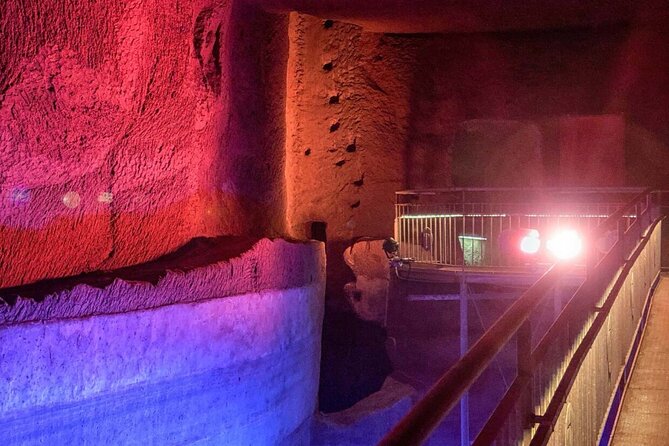
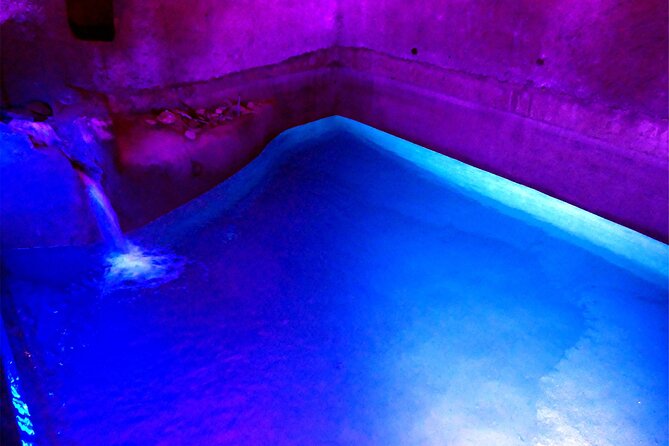
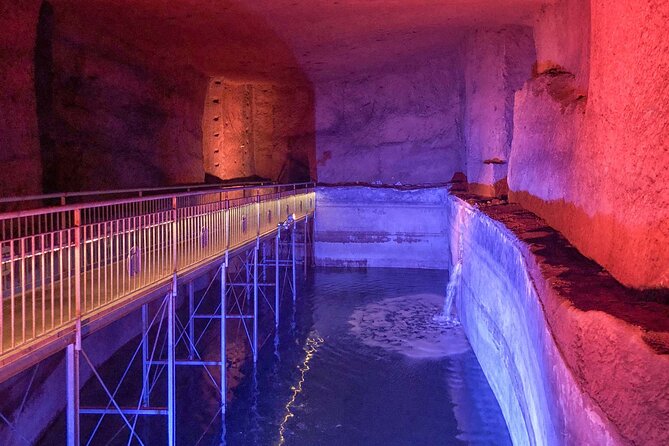
The visit also includes an ancient cistern and the Prince’s Pool, described as the largest underground pool in Naples. This is likely the most memorable section for many visitors because scale is easier to understand in person than in a written description.
The pool shows the size of the water infrastructure beneath the city. It also gives the route a strong visual centerpiece after the narrower aqueduct passages and stone chambers.
You should keep your expectations measured. This is a 75-minute tour, not a full archaeological study. The guide has to cover the basilica, chapels, aqueducts, cisterns, pool, and wartime shelter in a limited period. You will get an organized overview, but you may not have long periods to stop and inspect every feature.
For that reason, I would treat the Prince’s Pool as one of several connected highlights rather than the only reason to book. The appeal comes from the complete story: water storage, city planning, religious architecture, and refuge during wartime.
The shelter beneath Naples during the Second World War
The underground area was also used as a shelter during the Second World War. This changes the tone of the visit.
The same spaces that once held water later offered protection to Neapolitans during bombing. The shelter section brings personal hardship into a route that begins with ancient engineering. It helps you see how old underground rooms were reused when the city faced a modern crisis.
The museum uses films to help explain the lives of people who were forced to spend difficult periods in these underground cellars. That media element gives the shelter section more emotional context than stone walls alone can provide.
I consider this one of the most valuable parts of the visit, but it also requires respect. The area is not simply a dramatic underground attraction. People sheltered there, and some died as a result of bombing or disease. The experience works best when you allow time for that history rather than treating the chambers as a novelty.
The wartime story also links Naples’s distant past with its recent past. The aqueducts tell you how the city was supplied. The shelter tells you how people endured danger. Both stories are about the way Neapolitans adapted to what existed beneath their feet.
How the price compares with the short duration
The cost is $46.34 per person for about 1 hour and 15 minutes. That is a fairly high price for a short museum visit, so you should decide based on the quality of the guided content and the unusual setting.
You are paying for a Spanish-language guided experience, admission, the walk from Piazza Dante, and access to the underground route. If you prefer to move at your own pace or read displays quietly, the price may feel harder to justify. The visit does not offer a long block of free exploration.
I think the cost makes more sense for visitors who want a Spanish explanation of Naples’s underground layers and who might struggle to understand the archaeological remains alone. It also suits a tightly planned day, since the 75-minute format fits neatly between other central Naples sights.
The experience is booked around 35 days ahead on average. That suggests you should not leave it until the last moment if the Spanish-language option is important to you. The group maximum of 20 also limits the number of spaces at each departure.
Who will enjoy this Naples experience most
I would recommend this tour to you if you enjoy archaeology, city infrastructure, churches, or the less visible parts of urban history. It is particularly useful if you have already seen some of central Naples and want to understand what lies beneath it.
Families may also find the water system and underground route appealing. One piece of feedback specifically describes the museum as suitable for children, while another positive account says the experience can work for people with disabilities. Still, you should confirm your own mobility needs before booking, since the supplied details do not explain the exact route, stairs, lifts, or facilities.
The tour suits first-time visitors because it connects several periods in a short space. It may also appeal to repeat visitors who want something different from Pompeii, the National Archaeological Museum, or the major churches.
You may want to skip it if you dislike enclosed underground settings, need a long self-guided pace, or want an extensive archaeological tour. The route is compact and guided. Its strength is focus, not freedom to wander.
Practical details that affect the visit
The starting point is Piazza Dante, while the guided visit ends at the Lapis Water Museum in Piazzetta Pietrasanta. The fact that you finish at the museum is useful. You can continue exploring the historic center from there instead of retracing your route.
Public transportation is nearby, making Piazza Dante a practical meeting point. The tour confirmation is provided at booking, and most participants can take part according to the supplied activity information.
Free cancellation is available if you cancel at least 24 hours before the local start time. Changes or cancellations made inside that 24-hour window are not accepted for a refund. The experience also requires a minimum number of participants, so a cancellation by the operator would lead to another date, another experience, or a full refund.
A note of caution: some public comments connected to this attraction appear to concern the museum itself or a different booking agency rather than this Spanish-language tour. That can make a general rating less useful than the actual details of the experience. Check that your confirmation names the Spanish guided visit and the correct provider, Grand Tours Italy.
Should you book the Lapis Water Museum tour?
Book it if you want a focused Spanish-language look at the underground side of Naples. The combination of the Pietrasanta complex, 35-meter descent, ancient aqueducts, Prince’s Pool, and wartime shelter gives the visit a clear purpose.
At $46.34, it is not a bargain basement museum stop. You are buying a short guided experience, so the value depends on how much you want interpretation and how comfortable you are paying for a carefully organized route.
I would book this for a first or second day in Naples, especially if you like ancient engineering and serious local history. I would not book it as your only major archaeological activity, and I would not choose it if you need a slow, flexible visit. For the right audience, it offers a rare look at the city’s foundations and the lives lived below its streets.
FAQ
Where does the tour begin?
The tour begins at Piazza Dante in Naples, where the guide meets the group at the selected time.
Where does the tour finish?
The guided tour ends at the Lapis Water Museum, located at Piazzetta Pietrasanta 17 in Naples.
How long does the experience last?
The tour lasts approximately 1 hour and 15 minutes.
What language is the tour conducted in?
The guided visit is conducted in Spanish.
How far underground does the tour go?
The route descends about 35 meters to the deepest part of the city included in the visit.
What can you see inside the museum?
The route includes the Basilica of Santa Maria della Pietrasanta, Greek and Roman aqueducts, an ancient cistern, the Prince’s Pool, and an area used as a Second World War shelter.
What is the maximum group size?
The tour has a maximum of 20 participants.
How much does the tour cost?
The listed price is $46.34 per person.
Can I cancel for a full refund?
Yes. You can cancel at least 24 hours before the experience begins for a full refund. Cancellations made less than 24 hours before the start time are not refunded.
Just added around Naples
- Naples: Guided Walking Tour★ 4.7 · 63 reviews
- Wine tasting in the Vesuvius National Park★ 3.5 · 4 reviews
- Naples: Pompeii and Vesuvius Skip-the-Line Day Trip★ 3.8 · 32 reviews
- Visit the Museum MANN with a professional guide★ 5.0 · 3 reviews
- Walking-tour of Naples hystorical Centre★ 4.4 · 4 reviews
- Vesuvius – Herculaneum – Pompeii Excavations Tour★ 4.2 · 9 reviews
- Pompeii: Vesuvius at Sunset★ 3.5 · 31 reviews
- Vesuvius and Herculaneum from Naples★ 3.7 · 29 reviews
Museums, compared.

National Archaeological Museum Ticket & Audio App
Read our review →
National Archaeological Museum of Naples Guided Tour
Read our review →
National Archaeological Museum Tour & Digital Guide
Read our review →


Sant’Aspreno ai Crociferi: Church & Jago Museum Guided Tour
Read our review →
Skip the Line: National Archaeological Museum of Naples Entry Ticket
Read our review →
Browse the lists this tour appears in