
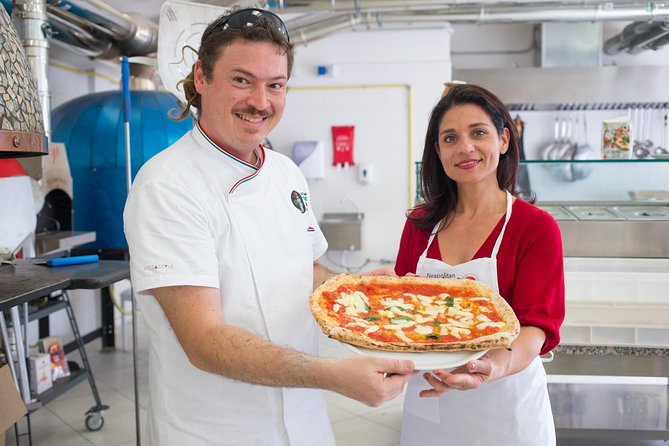
Reviewed · 1-DAY TOURS
Neapolitan Pizzamaker for One Day
Neapolitan pizza here is more than a meal. At the official school for pizza makers, you learn why this simple dish matters to Naples, then make it yourself from dough to wood-fired oven. The class covers the story of true Neapolitan pizza, the ingredients behind a Margherita, and the hands-on work of shaping and baking.
I like the small maximum of 10 people, which gives the instructor room to watch your technique. I also like that the class explains the science and history instead of simply handing you flour and sending you toward a finished pizza. When Peter teaches, his clear demonstrations and practical advice are a real strength.
The main consideration is physical comfort. You can spend much of the session standing, and the cooking room may become hot near the wood oven. At about $112.93 for three hours, this is a serious cooking class rather than a quick pizza lunch, so book it if learning matters as much as eating.
Key points to know before booking
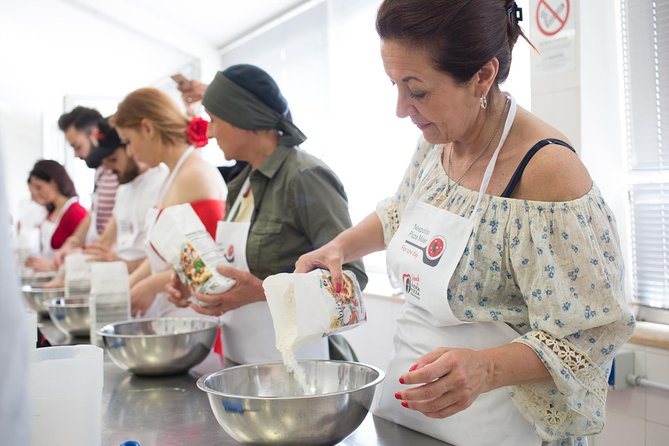
- You make the dough yourself: Kneading, proofing, shaping, and topping are part of the lesson.
- The Margherita ingredients are treated seriously: Fresh tomatoes, basil, and other traditional ingredients help explain what makes the pizza Neapolitan.
- The wood-fired oven is part of the work: You spread, season, and cook the pizza rather than watching a chef do everything.
- History is built into the class: The lesson explains pizza’s place in Neapolitan food culture and its UNESCO recognition as intangible heritage.
- The group is limited to 10 people: That is useful for a hands-on class, especially for first-time pizza makers.
- Plan for a three-hour standing session: The room can feel hot, and there are no chairs during the class.
Why this class is different from a pizza meal

Naples gives you no shortage of places to eat pizza. A classic pizzeria can serve you a remarkable Margherita in minutes, but eating one does not explain why the dough behaves as it does or why the order of the toppings matters.
This workshop takes the opposite approach. You begin with the foundations, then work through the steps that turn a few basic ingredients into a soft, blistered pizza. The point is not only to eat a good lunch. It is to understand how the pizza is made and to leave with skills you can try at home.
The craft of the Neapolitan pizzaiuolo has been recognized by UNESCO as an intangible heritage of humanity. That recognition gives the class useful cultural weight, but the lesson remains practical. You are not sitting through a long lecture. You hear the background, watch a demonstration, and then repeat the work with your own hands.
I especially like this balance. Some cooking classes focus on entertainment and give you a finished dish with little explanation. This one is designed for people who want to understand the dough, the ingredients, the oven, and the tradition behind the food.
A few more Naples outings worth a look
- From Naples: Amalfi Coast Full-Day Trip
★ 4.5 · 4,354 reviews - From Naples: Pompeii & Amalfi Coast Full-Day Trip with Lunch
★ 4.5 · 2,155 reviews - From Naples or Sorrento: Amalfi Coast Full-Day Trip
★ 4.7 · 2,043 reviews
Arriving at Via Capodimonte
The class begins at Via Capodimonte, 19a, in Naples, and ends at the same meeting point. The location is near public transportation, which matters in a city where a short journey can take longer than expected.
The meeting point is in the Capodimonte area, so allow enough time to reach it. Your confirmation is sent within 48 hours of booking, subject to availability, and the class is offered in English. Since the start times are fixed, you do not want to arrive rushed or discover that you have underestimated the trip across town.
There are two daily sessions: 10 am to 1 pm and 3 pm to 6 pm. The morning class works well if you want pizza finished before the rest of your sightseeing day. The afternoon class may suit you better if you plan to visit another part of Naples first.
The activity ends where it starts. That makes the return simple, but it also means you should plan any later reservation with enough time to get back across the city. The listed duration is approximately three hours, though one account describes standing for closer to four hours. I would plan for a substantial morning or afternoon rather than assuming you will be free immediately at the stated end time.
Starting with coffee and the story of pizza
The session opens with a welcome coffee and an introduction to true Neapolitan pizza. This is not filler. The history gives context to the techniques you will use later.
Naples treats pizza as a local tradition, not just an easy meal. The class explains its importance in Neapolitan cooking and introduces the idea of the pizzaiuolo, the person who manages the dough, toppings, heat, and timing. You begin to see that the finished pizza depends on many small choices.
This section is also helpful if you have already made pizza at home. Several participants with home-baking experience wanted more than a basic flour-and-toppings activity. The class addresses the reasons behind the method, including the role of each ingredient and why ingredients are added in a particular order.
If you are new to pizza making, do not worry about arriving with technical experience. The class is structured around a demonstration followed by hands-on practice. That makes it suitable for first-timers, while the explanation of dough and firing gives more experienced cooks something useful to take home.
Mixing, kneading, and managing the dough
The central part of the lesson is the dough. You work with the raw materials, follow the demonstration, and make the dough yourself. Proper kneading and proofing are included, so the class covers more than shaping a prepared ball of dough.
This is where the experience earns much of its price. At a regular restaurant, you can taste the result but never see how the dough was developed. Here, you handle it at each important stage. You learn how it feels, how it changes as you work it, and how it must be treated before it reaches the oven.
The language used in the instruction is English, and Peter is specifically praised as a clear and patient teacher. His method combines demonstration with immediate practice. That is a useful format because you can watch the movement first, then try it while the steps are fresh.
The class is not presented as a rushed activity for children only, and it is not reserved for professional cooks. It is designed for visitors of all ages. Still, the work is physical. Expect to stand, bend over your work, and keep your attention on the dough for a while.
Same city, an entirely different sort of day:
- From Naples: Pompeii Ruins & Mount Vesuvius Day Tour
★ 4.3 · 11,459 reviews - From Naples: Sorrento, Positano and Amalfi Full-Day Tour
★ 4.6 · 10,988 reviews - From Naples: Sorrento, Positano & Amalfi Coast – Small Group Tour
★ 5.0 · 8,643 reviews - Naples: Catacombs of San Gennaro Entry Ticket & Guided Tour
★ 4.6 · 7,941 reviews
Fresh ingredients and the Margherita method
The pizza is seasoned with the ingredients associated with a real Margherita. Fresh toppings and basil from the school’s herb garden are part of the experience described by one participant, giving the ingredient lesson a direct connection to the finished pizza.
The value here is not the number of toppings. Neapolitan pizza is known for restraint. The class helps you understand why a short list of ingredients can still produce a full-flavored result when the dough, sauce, basil, and cheese are handled properly.
You also learn the order in which ingredients are added. That may sound minor, but it is the kind of detail that affects moisture, balance, and cooking. If you have tried making pizza at home, this is likely to be more useful than a long list of optional toppings.
The focus on fresh, traditional materials also keeps the class tied to Naples. You are not making a generic pizza with whatever happens to be available. You are working toward the style the school teaches as true Neapolitan pizza.
Shaping the pizza without losing the dough
After the dough work, you spread and shape the pizza. This is often the moment when home cooks discover how different pizza dough can be from bread dough or pastry.
The technique requires a light touch. Push too hard and you can flatten the structure you worked to create. Handle it too roughly and the shape becomes uneven. A demonstration followed by direct practice gives you a chance to correct those problems before the pizza goes into the oven.
The class is also useful because your mistakes are part of the lesson. You are not expected to produce a perfect round on the first try. The instructor can explain how to move the dough, where to leave more thickness, and how to prepare it for the toppings.
Keep in mind that the group is small, but it is still a group activity. You will work alongside other people and share the social side of the class. That can be a plus if you like meeting fellow food enthusiasts. If you want a private lesson with uninterrupted attention, this may feel less personal.
The wood-fired oven and the final bake
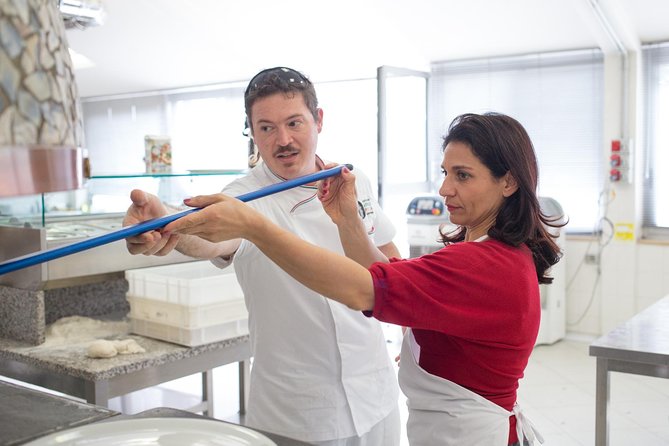
The most exciting part is the wood-fired cooking. You take your prepared pizza to the oven, where heat changes the dough quickly. The lesson does not stop at preparation. You get to see how the pizza cooks and taste the difference that proper firing makes.
This is also the warmest part of the day. One important practical warning is that the room can become very hot, particularly while people are cooking. There are no chairs, and you may be standing for most of the session. Wear comfortable clothes and shoes, and do not schedule this as a low-effort break between several demanding activities.
The oven adds a real sense of place. You are learning a method tied to Neapolitan pizza rather than using a standard home kitchen oven. Even if you cannot copy the exact setup at home, understanding the timing and handling can improve your own cooking.
The class finishes with the pizza cut into wedges for tasting. This is a satisfying end because you can judge the result immediately. The meal is not separate from the lesson. You eat the pizza you have shaped, seasoned, and cooked.
Is $112.93 a fair price?
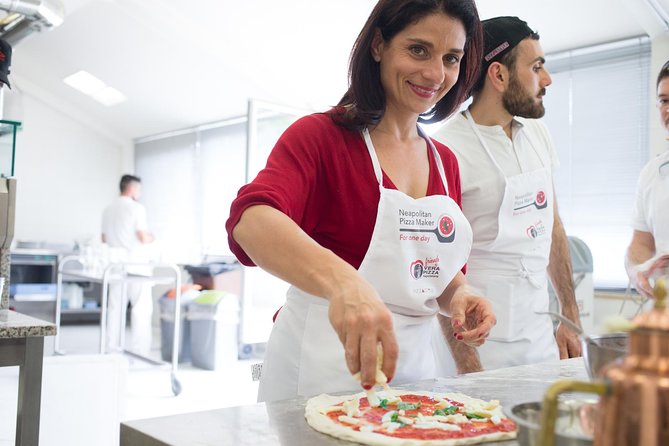
At $112.93 per person, this costs more than ordering a pizza in Naples. That comparison is fair, but it misses what you are paying for.
The fee covers approximately three hours of instruction, access to a pizza-making school, ingredients, demonstrations, hands-on dough work, wood-oven cooking, and the final tasting. The maximum group size of 10 makes the price easier to justify because the session is built around participation rather than watching from the back of a large room.
I would call it good value for someone who wants a real cooking lesson. It is less attractive if you simply want lunch or are trying to keep your Naples food budget low. A pizzeria meal will be cheaper and quicker. This class makes sense when you want an activity that combines food, local tradition, and a skill you can use later.
The value is also stronger for people who cook at home. Several aspects of the lesson are designed to improve your method, including kneading, proofing, ingredient order, shaping, and firing. If you have tried pizza making during lockdown or already bake regularly, the class can be a useful next step.
Who should book this experience?
I would recommend it to first-time pizza makers, home cooks, couples, families, and anyone who wants a food activity with real instruction. The all-ages format makes it flexible, and the three-hour schedule gives the subject enough time to be treated properly.
It is especially suited to you if you want to bring a practical memory home. You may not reproduce a Naples wood oven in your kitchen, but you can carry away a better feel for dough, a clearer understanding of the process, and a new respect for simple ingredients.
I would hesitate if you dislike standing for long periods, struggle with heat, or want a quick activity. There are no chairs, and the cooking area can be uncomfortable when the oven is in use. The class also requires more attention than a casual tasting.
The English-language format is helpful for international visitors, and the small group should make it easier to follow the demonstrations. If you are booking around a tight sightseeing plan, choose the 10 am to 1 pm or 3 pm to 6 pm slot carefully and allow extra time for transportation.
Booking and cancellation details
Confirmation is sent within 48 hours, subject to availability. The experience is offered every day, with the two listed time slots, and you return to the starting point at the end.
You can cancel for a full refund up to 24 hours before the experience begins. Cancellations or changes made less than 24 hours before the start time are not refunded or accepted. The cut-off uses local Naples time, so check your schedule before booking.
The activity uses a mobile ticket, which is convenient for a day of sightseeing. Keep the meeting point, Via Capodimonte, 19a, easy to find on your phone before leaving.
Should you book the Neapolitan Pizzamaker for One Day?
Book this class if you want to understand Neapolitan pizza, not simply eat it. The strongest parts are the hands-on dough work, the explanation of ingredients and history, the small group, and the wood-fired finish.
The price is high for a meal, but reasonable for a three-hour cooking workshop with instruction and tasting. I would choose it for a relaxed Naples itinerary, especially if you cook at home or want a memorable food experience beyond restaurant hopping.
Skip it if you need a short stop, prefer to sit, or dislike heat. For everyone else, this is a practical way to connect a famous Neapolitan dish with the people, methods, and traditions behind it.
FAQ
How long does the Neapolitan pizza-making class last?
The activity lasts approximately three hours. The available sessions run from 10 am to 1 pm and from 3 pm to 6 pm.
How much does the experience cost?
The listed price is $112.93 per person.
Where does the class start?
The class starts at Via Capodimonte, 19a, 80131 Napoli NA, Italy.
Where does the activity end?
The activity ends back at the meeting point on Via Capodimonte.
Is the class offered in English?
Yes. The experience is offered in English.
How many people can join the class?
The maximum group size is 10 people.
What do you make during the class?
You make true Neapolitan pizza, including the dough, shaping, seasoning, and cooking. The sample menu lists pizza as the main dish.
Is the pizza cooked in a wood oven?
Yes. You spread and cook the Neapolitan pizza in a wood-fired oven.
What time of day can I take the class?
The class is offered daily from 10 am to 1 pm and from 3 pm to 6 pm.
Can I cancel for a full refund?
Yes, if you cancel at least 24 hours before the experience start time. Cancellations made less than 24 hours before the start are not refunded, and changes during that period are not accepted.
Just added around Naples
- Naples: Guided Walking Tour★ 4.7 · 63 reviews
- Wine tasting in the Vesuvius National Park★ 3.5 · 4 reviews
- Naples: Pompeii and Vesuvius Skip-the-Line Day Trip★ 3.8 · 32 reviews
- Visit the Museum MANN with a professional guide★ 5.0 · 3 reviews
- Walking-tour of Naples hystorical Centre★ 4.4 · 4 reviews
- Vesuvius – Herculaneum – Pompeii Excavations Tour★ 4.2 · 9 reviews
- Pompeii: Vesuvius at Sunset★ 3.5 · 31 reviews
- Vesuvius and Herculaneum from Naples★ 3.7 · 29 reviews
1-Day Tours, compared.
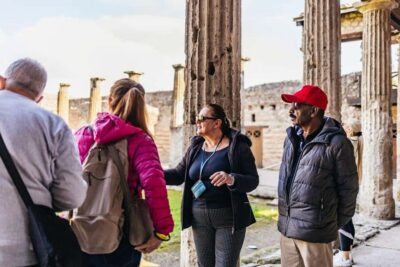
Pompeii & Amalfi Coast Full-Day Trip with Lunch
Read our review →
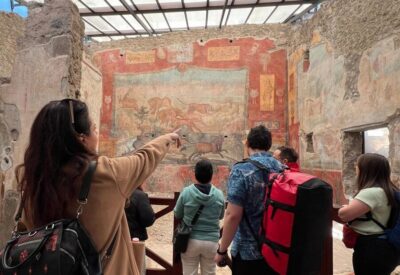
Pompeii & Mt. Vesuvius Day Trip with Tickets & Lunch
Read our review →
Day Trip to Capri and Blue Grotto From Naples & Sorrento
Read our review →
Skip-the-Line Pompeii & Mt. Vesuvius Day Trip from Naples
Read our review →
Sorrento and Amalfi Coast Small Group Day Trip from Naples
Read our review →
Day Trip of Pompeii, Sorrento and Positano from Naples/Salerno
Read our review →
Day Trip of Pompeii, Herculaneum and Vesuvius from Naples
Read our review →Browse the lists this tour appears in